

Why animation works so well in commercials
Animation for commercials gives brands something live-action rarely can: complete creative control over every frame. The color, the physics, the characters, the world itself. Nothing is constrained by what a camera can capture or what a location scout can find.
The results speak for themselves. Animated ads consistently outperform static alternatives in recall and emotional engagement, and the format works across every screen size, from a 60-foot out-of-home display to a phone held six inches from someone's face. That flexibility is one reason brands from Coca-Cola to Apple keep returning to animation even when their production budgets could fund a feature film.
What actually makes an animated commercial land?
- Style alignment: The animation style must match the brand's personality. A cel-shaded look signals something different than clean motion graphics.
- Storytelling clarity: Thirty seconds is short. Every scene needs to earn its place.
- Sound design: Music and audio cues do roughly half the emotional work in any animated spot.
- Audience specificity: A Gen-Z audience responds to different visual references than a 45-year-old homeowner. Animation lets you tune every visual signal to your exact viewer.
- Brand consistency: Color palettes, character design, and motion language should feel like extensions of the brand's existing identity, not a departure from it.
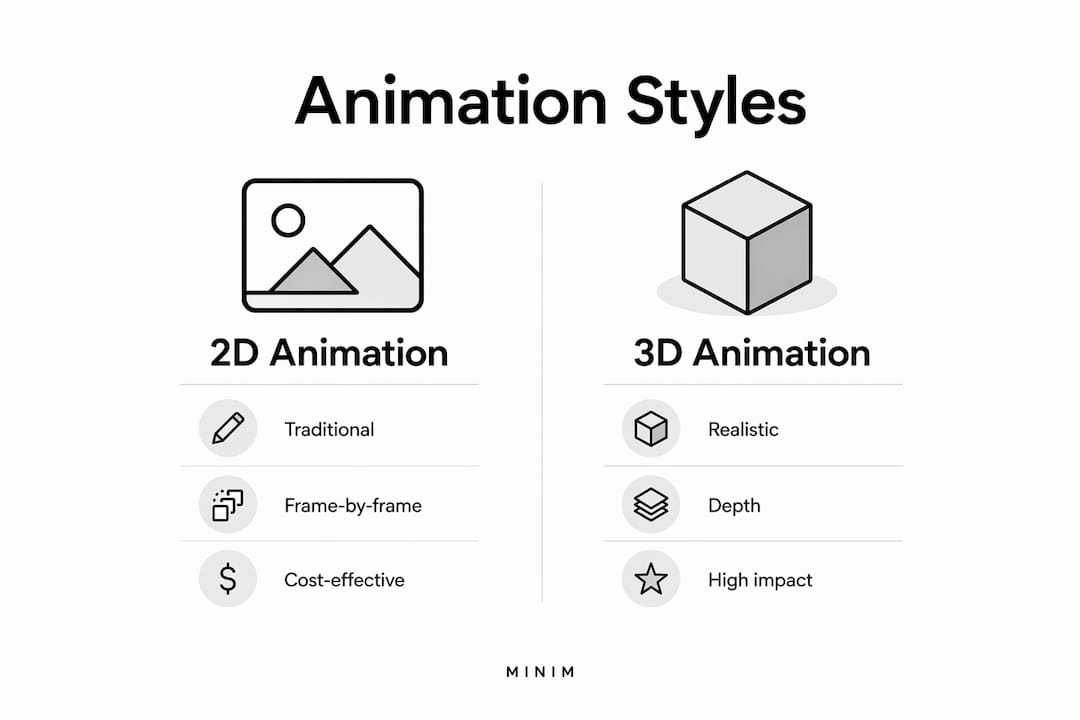
The format also scales well economically. 2D animation rivals live-action and 3D in audience impact while typically costing less to produce, which is why it remains a go-to for brands that want high creative quality without a blockbuster budget.
Table of Contents
- 10 animated commercials every creative professional should study
- 1. John Lewis: The Bear and the Hare
- 2. Coca-Cola: Happiness Factory
- 3. Honda Civic 50th Anniversary
- 4. Slack: Work, Simplified
- 5. Microsoft Loop
- 6. Apple: Korean New Year
- 7. DoorDash: Design Connects
- 8. Porsche: animated brand films
- 9. Tag Heuer: motion and precision
- 10. Noom Weight
- What animation styles actually get used in commercials?
- How to create an animated commercial that actually works
- What the best creative directors actually do differently
- MINIM brings cinematic animation production to your agency
- Key Takeaways
10 animated commercials every creative professional should study
These campaigns represent the range of what animated commercial production can achieve, from quiet emotional storytelling to full-throttle visual chaos.
1. John Lewis: The Bear and the Hare
John Lewis turned a 2D animated Christmas spot into a cultural event. The Bear and the Hare uses a deliberately traditional hand-drawn style, warm color palettes, and almost no dialogue. The emotional weight comes entirely from character animation and a well-chosen music track. What makes it a masterclass is restraint: the brand barely appears, yet the spot is unmistakably John Lewis. It proved that animation could carry the same emotional freight as the most expensive live-action holiday films.
2. Coca-Cola: Happiness Factory
This is probably the most ambitious animated commercial ever made for a vending machine. Coca-Cola built an entire fantasy world inside the machine, populated with bizarre creatures whose sole purpose is to prepare and deliver a perfect Coke. The production design is dense and layered, rewarding repeat viewing. It works because the absurdity is completely committed. There is no winking at the camera. The world is real, and that conviction makes the viewer believe it too.
3. Honda Civic 50th Anniversary
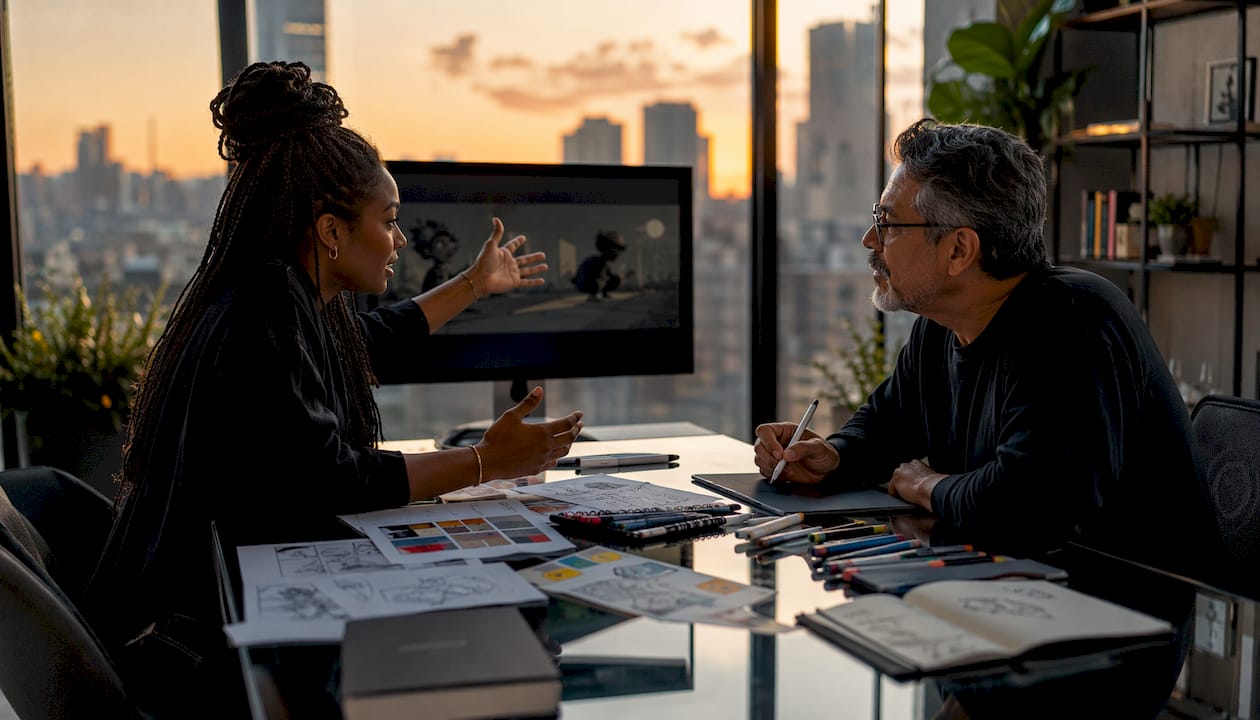
Honda's 50th anniversary spot for the Civic used 2D animation to compress five decades of automotive history into a single, kinetic sequence. The animation style shifts across eras, mirroring the design language of each decade's Civic. It is a technical achievement and a brand history lesson delivered in under two minutes. The lesson for creative teams: animation can handle time in ways live-action simply cannot.
4. Slack: Work, Simplified
Slack's animated ad campaign leaned into motion graphics rather than character animation. Clean geometric shapes, a muted color palette, and tight transitions illustrated the chaos of fragmented workplace communication and then showed how Slack resolves it. The visual language matched the product's interface design, so the ad felt like an extension of the product rather than a separate creative exercise. That coherence is harder to achieve than it looks.
5. Microsoft Loop
Microsoft used animation to explain a genuinely complex product concept: real-time collaborative components that live across different apps. Live-action would have required screen recordings and talking heads. Instead, the animated ad campaign used abstract shapes and fluid transitions to show data moving between surfaces, making an abstract software concept feel intuitive. When your product is hard to film, animation is often the clearest path to comprehension.
6. Apple: Korean New Year
Apple's Korean New Year spot blended 2D animation with live-action footage, using traditional Korean folk art aesthetics as the visual foundation. The animation sequences felt culturally specific without being superficial. It demonstrated something important: animation can carry cultural meaning in ways that generic live-action rarely achieves. The spot also showed how a global brand can use animation to speak directly to a specific community without alienating a broader audience.
7. DoorDash: Design Connects
DoorDash used animation to tell the story of how design thinking connects people to food and communities. The visual style was deliberately hand-crafted, with loose lines and textured fills that felt warm and human rather than corporate. For a tech platform that can feel transactional, the animation reframed the brand as something closer to a neighborhood institution. Style choice did the heavy lifting here.
8. Porsche: animated brand films
Porsche has used animation in brand films to explore the emotional relationship between driver and machine in ways that no track day footage can replicate. By animating the car's history and the sensory experience of driving, Porsche reached viewers who respond to craft and artistry rather than horsepower specs. The animated commercial production approach let the brand speak to feeling rather than function.
9. Tag Heuer: motion and precision
Tag Heuer's animated ads use motion graphics to visualize precision, speed, and mechanical complexity. Watch mechanisms rendered in 3D animation advertising give the viewer a sense of what happens inside the case, something a photograph of the dial never could. The animation style is restrained and technical, which mirrors the brand's positioning exactly. When your product's value lives inside it, animation can show what photography hides.
10. Noom Weight
Noom's animated ads tackled a genuinely difficult creative challenge: making a weight management app feel warm, personal, and non-judgmental. Character-based 2D animation ads let Noom show relatable scenarios without using real people, which removed the risk of viewers feeling targeted or shamed. The character design was deliberately diverse and approachable. Animation gave the brand a way to discuss a sensitive topic with empathy rather than clinical detachment.
What animation styles actually get used in commercials?
The style choice is a creative decision with real strategic consequences. Each format carries different production costs, timelines, and audience associations.
2D animation
The oldest format and still one of the most versatile. Traditional 2D uses frame-by-frame character animation, either hand-drawn or produced digitally using tools like Adobe Animate or Toon Boom Harmony. It tends to feel warm, accessible, and nostalgic, which is why brands targeting emotional connection often reach for it. The John Lewis and Noom examples above both rely on 2D's ability to make characters feel genuinely human without the uncanny valley problems that can plague 3D character work.
Digital 2D animation is also faster and less expensive than 3D for most commercial applications. For a 30-second spot, production costs typically run within a moderate range depending on complexity and style, with 2D generally being more cost-effective.

3D animation
3D animation advertising adds depth, realism, and physical weight. It is the right choice when the product itself needs to be the hero, as with the Tag Heuer watch mechanism or a car's interior. Software like Cinema 4D, Blender, and Autodesk Maya dominates professional 3D animated commercial production. The tradeoff is cost and render time: a photorealistic 3D spot takes significantly longer to produce than a comparable 2D piece.
Motion graphics
Motion graphics sit at the intersection of graphic design and animation. They use typography, shapes, icons, and data visualizations rather than characters or narrative. Slack's Work, Simplified campaign is a clean example. Motion graphics work particularly well for SaaS products, financial services, and any brand that needs to explain a process or system quickly. Tools like Adobe After Effects and Cinema 4D are standard in this space.
Hybrid and emerging styles
Several campaigns have pushed beyond clean category lines. Picnic Studio's Breachbunny campaign blended anime-inspired 2D animation with motion graphics and multiple visual styles simultaneously. Stop-motion animation, cel-shading, and motion capture are all appearing more frequently in commercial work as production pipelines become more accessible. The DoorDash spot's hand-crafted texture is another example of a hybrid approach that uses digital tools to simulate analog warmth.
How to create an animated commercial that actually works
Production quality matters, but process matters more. A technically polished spot built on a weak creative foundation will underperform a scrappier one with a clear, specific idea.
-
Define the single idea. Every great animated commercial is built around one clear thought. Not a list of product features. One idea. Write it in a sentence before you open any software.
-
Write the script and time it. A 30-second spot has room for roughly 75 words of voiceover. Every word competes with the visuals for attention. Cut until what remains is necessary.
-
Build the storyboard. This is where the commercial actually gets made, conceptually. Storyboarding forces decisions about pacing, scene transitions, and visual hierarchy before any animation begins. Changes at this stage cost hours. Changes during animation cost days.
-
Choose the animation style. The style should emerge from the brand's visual identity and the emotional tone the script requires, not from what's trending. A mismatch between style and message is one of the most common failures in animated ad campaigns.
-
Design characters and environments. Character design in particular has long-term brand implications. If the character works, it can become a brand asset that lives across campaigns. If it doesn't, it's expensive to fix.
-
Animate, review, and iterate. Professional animated commercial production involves multiple rounds of review at the animatic stage before full animation begins. Catching a pacing problem in an animatic takes an hour to fix. Catching it in a finished animation takes a week.
-
Sound design and music. Commission or license music early. The wrong track can undermine technically perfect animation. The right one can make a mediocre spot feel great.
-
Post-production and delivery. Color grading, final compositing, and format delivery for different platforms (broadcast, social, out-of-home) all require separate attention. A spot that looks perfect on a desktop monitor can look flat on a phone screen.
Pro Tip: Build your brand's animation style guide before you start production. Document the color palette, approved typefaces, motion principles, and character design rules. This single document will save more time and money than any other pre-production investment, especially if you plan to run multiple animated ad campaigns over time.
What the best creative directors actually do differently
The gap between a forgettable animated spot and one people share is almost always a creative direction decision made before a single frame was drawn.
Creative Director Liam O'Connor, describing the Breachbunny production for Picnic Studio, put it plainly:
That quote describes something specific: a creative team that had fully inhabited the brand's world before they started making anything. The result was a 134-second cyberpunk action spot that blended anime-inspired 2D, motion graphics, and multiple visual styles into something that felt genuinely singular. It worked because the vision was locked before production began, not discovered during it.
The other major shift shaping commercial animation right now is the relationship between fictional worlds and everyday realism. High-resolution displays on phones, tablets, and digital out-of-home screens have raised viewer expectations considerably. Audiences notice when textures look cheap or when motion feels weightless. The most effective animated commercials today tend to balance fantasy with tangible visual cues that feel grounded in physical reality, even when the world on screen is entirely invented.
Three patterns show up consistently in the work that breaks through:
- World-building before character design. The best animated campaigns establish a coherent visual world first, then populate it with characters that belong there. The Happiness Factory and Breachbunny both follow this logic.
- Sound as a co-equal creative element. The most memorable animated spots treat music and sound design as part of the creative brief, not a post-production afterthought. Antfood's soundtrack for Breachbunny is as much a part of the campaign's identity as the visual style.
- Restraint in the service of clarity. The John Lewis Bear and the Hare uses almost no dialogue. The Slack motion graphics spot uses almost no characters. Both made deliberate subtractions that made the core message stronger.
MINIM brings cinematic animation production to your agency
Agencies that need premium animated commercial production without adding headcount have a direct path: MINIM integrates with your creative team and handles execution from concept through final delivery.
The work covers the full production range: creative strategy, screenwriting, art direction, 2D and 3D visual effects, and in-house studio services. Whether you're developing a character-driven 2D campaign or a technically demanding 3D product spot, MINIM operates as a production partner rather than a vendor, which means your creative vision stays intact while the execution gets handled at a cinematic level. No scope creep, no handoff friction, no rebuilding context with a new team on every project.
If your agency has animated commercial campaigns in the pipeline and needs a production partner that can move at the speed your clients expect, see what MINIM delivers and get in touch to discuss your next project.
Key Takeaways
Animation is the most flexible format in commercial production, giving brands complete creative control over every visual element while remaining cost-effective across 2D, 3D, and motion graphics styles.
| Point | Details |
|---|---|
| Style drives strategy | The animation style must match brand personality and emotional tone, not just current trends. |
| 2D remains cost-effective | A 30-second spot has room for roughly 75 words of voiceover. |
| Creative vision comes first | Locking a clear creative direction before production begins separates memorable campaigns from forgettable ones. |
| Sound design is half the work | Music and audio cues carry roughly half the emotional impact in any animated commercial. |
| MINIM as production partner | MINIM integrates with agency creative teams to deliver full-service animated commercial production at a cinematic level. |
Recommended
- Work | Elevate Your Content — Get Started Today — MINIM | Content Production Company
- Our Services | Enhance Your Brand Today — MINIM | Content Production Company
- Our Services (Copy) | Elevate Your Brand Today - Explore Our Services — MINIM | Content Production Company
- MINIM | Content Production Company