
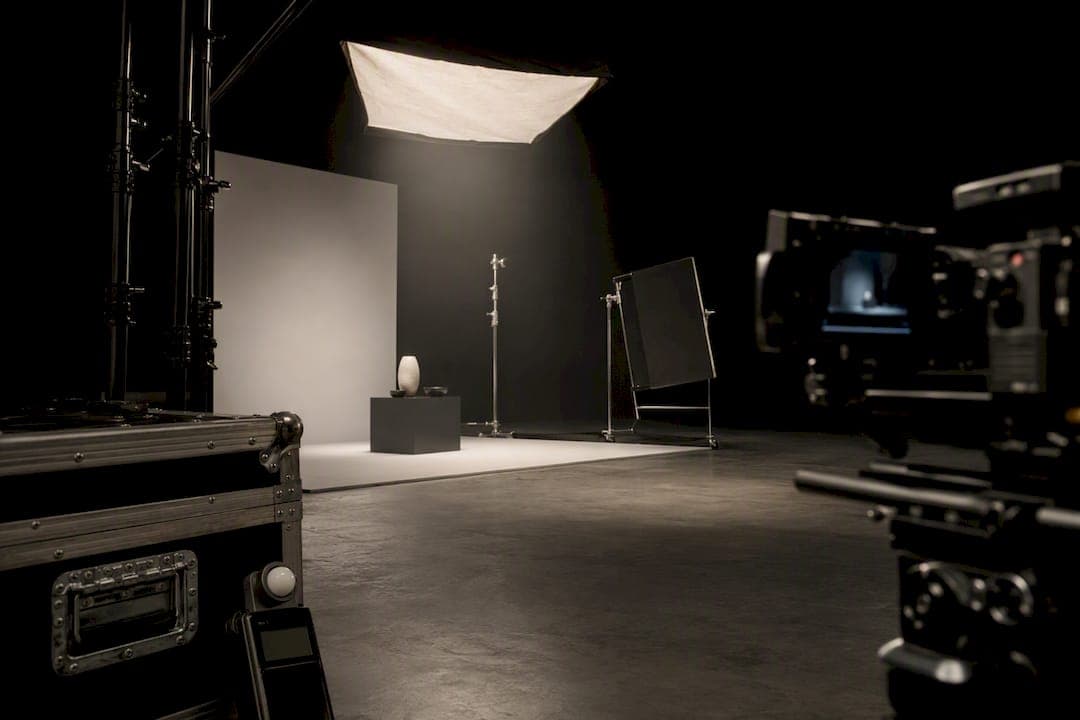
A full-service commercial studio shoot typically ranges widely in cost, with national campaigns sometimes exceeding typical upper industry ranges. That range covers creative development, preproduction, crew, studio rental, equipment, and post-production. Costs climb toward the top end when a project adds recognizable talent, multiple shoot days, or heavy visual effects work.
TL;DR:
- A typical studio shoot includes preproduction, crew, studio rental, talent, post-production, and operational costs, which must be itemized for accurate comparison.
- Budgets vary widely based on scope, with low-tier projects lasting a day and involving minimal sets, while high-tier shoots can include multiple days, actors, custom sets, and complex VFX.
- Comparing proposals requires detailed line-item breakdowns and clear definitions of deliverables, usage rights, and revision policies to avoid unexpected costs.
- Overall project duration from start to finish averages five months, with preproduction taking three to six weeks, shoot days one to five, and post-production four to eight weeks.
- Controlling costs involves consolidating setups, reusing assets, negotiating usage scope, and working with a transparent, dedicated production partner to prevent scope creep and unexpected charges.
Table of Contents
- What Actually Goes Into a Studio Shoot Cost?
- What Do Low, Mid, and High Budgets Actually Buy?
- How to Get Quotes You Can Actually Compare
- How Long Does a Studio Shoot Actually Take?
- Where Budgets Inflate, and How to Pull Them Back
- How a Production Partner Keeps Studio Budgets Predictable
- Ready to Scope Your Next Studio Shoot?
- Where These Numbers Come From
- Sources
What Actually Goes Into a Studio Shoot Cost?
Every studio shoot bid breaks down into the same core buckets, even when the numbers vary wildly between vendors. Reading a proposal line by line is the only way to know whether two quotes are actually comparable, or whether one vendor quietly left out post-production and the other didn't.
Preproduction covers creative development, producer fees, scriptwriting, and casting logistics. This phase sets the direction everything else follows, and cutting it short is usually where budgets go sideways later. Crew costs are structured around day rates: a director, director of photography, gaffer, grip, and production assistants each carry their own rate, and a full crew day can run from a few thousand dollars for a lean setup to tens of thousands for a broadcast-scale shoot. Colossyan's pricing data shows freelance day rates and studio rental bands varying widely by market and crew size, which is exactly why a single "average" figure rarely holds up across proposals.
Beyond crew, the line items to watch for include:
- Studio rental and grip equipment: lighting rigs, camera packages, and stage time, often bundled but sometimes billed separately.
- Talent and casting fees: on-camera actors or models, plus usage and licensing terms that determine how long and where the footage can run.
- Post-production: editing, color grading, sound design, VFX, and delivery in the formats your media plan requires.
- Operational costs: permits, insurance, catering, travel, and a contingency line for the unexpected.
Skipping any of these in a quote doesn't mean the cost disappears. It means it shows up later as a change order.
What Do Low, Mid, and High Budgets Actually Buy?
Production scope moves along several independent axes at once, crew size, shoot days, talent, and VFX complexity, which is why pricing guides land on such wide ranges. Here's what three common tiers typically look like in practice.
- Low tier: A single-day studio shoot built for social spots or a small product line. Expect a lean crew of two to four people, minimal set dressing, and a compressed post schedule. This tier excludes custom sets, name-brand talent, and multiple locations.
- Mid tier: A multi-day shoot with a small cast, modest wardrobe and set requirements, and a fuller post-production pass including color and sound design. Leadde's pricing breakdown places most brand commercials in a broad upper range once talent and finishing are added.
- High tier: Broadcast-quality commercials with contracted actors, custom-built sets, and layered VFX. Costs escalate significantly because every added shoot day multiplies crew, studio, and equipment fees, and VFX work is billed by shot complexity, not by a flat rate.
The tier that fits your project depends less on brand size and more on how many of those variables you're stacking at once.
How to Get Quotes You Can Actually Compare
The fastest way to blow a budget is comparing two proposals that quietly define "deliverables" differently. A tight brief fixes that before quotes even come in.
Your brief or RFP should specify usage rights, run time, deliverable formats, reference creative, and any mandatory shoot or delivery dates. Ask every vendor for line-item pricing rather than a single lump sum, and request their standard assumptions around revision rounds and crew size so you're not comparing a bare-bones quote against a fully loaded one.
Before signing, confirm:
- How change orders are priced and approved mid-production.
- Whether usage and licensing terms cover social only, or extend to broadcast and paid media.
- What milestones trigger each delivery and payment.
- Whether contingency and optional add-ons are itemized or buried in the total.
A vendor who refuses is telling you their number is softer than it looks.*
Usage licensing catches more agencies off guard than any other line item. Clutch's pricing guide flags distribution scope as one of the most common renegotiation triggers after a shoot wraps, precisely because it's easy to gloss over in an initial brief.
How Long Does a Studio Shoot Actually Take?
Agency-level productions commonly run about five months from brief to final delivery, according to Clutch's aggregated project data. That window breaks down roughly like this:
- Preproduction (three to six weeks): creative development, casting, location or studio lock, scheduling.
- Production (one to five days): shoot days scale with deliverable count and setup complexity.
- Post-production (four to eight weeks): editing, color, sound, VFX, and review rounds before final mastering.
Compressing any of these phases usually means paying for overtime, expedited post, or additional crew. If timeline pressure is unavoidable, invest the saved time in preproduction planning instead, it's the cheapest place to buy certainty. For a fuller breakdown of how milestones stack up, MINIM's production timeline guide walks through the scheduling math in more detail.
Where Budgets Inflate, and How to Pull Them Back
Most budget overruns trace back to the same handful of decisions. Extra shoot days multiply crew and studio costs simultaneously. Name-brand talent adds both fees and usage premiums. Bespoke sets and complex VFX get billed per unit of complexity, not on a flat curve.
Agencies looking to protect creative quality while controlling spend usually lean on a few consistent levers:
- Consolidate setups so one lighting configuration covers multiple shots.
- Reuse sets, props, or wardrobe across deliverables within the same shoot.
- Limit camera setups per scene rather than covering everything from five angles.
- Bundle post-production work with the same vendor to avoid duplicate onboarding costs.
- Negotiate a tighter usage window if broadcast-length licensing isn't actually needed yet.
Virtual production and AI-generated content are worth weighing for specific use cases, particularly internal or training content, where Colossyan notes AI platforms can undercut traditional production significantly. But for brand commercials meant to carry a campaign, that trade-off usually costs more in creative flexibility than it saves in dollars.
How a Production Partner Keeps Studio Budgets Predictable
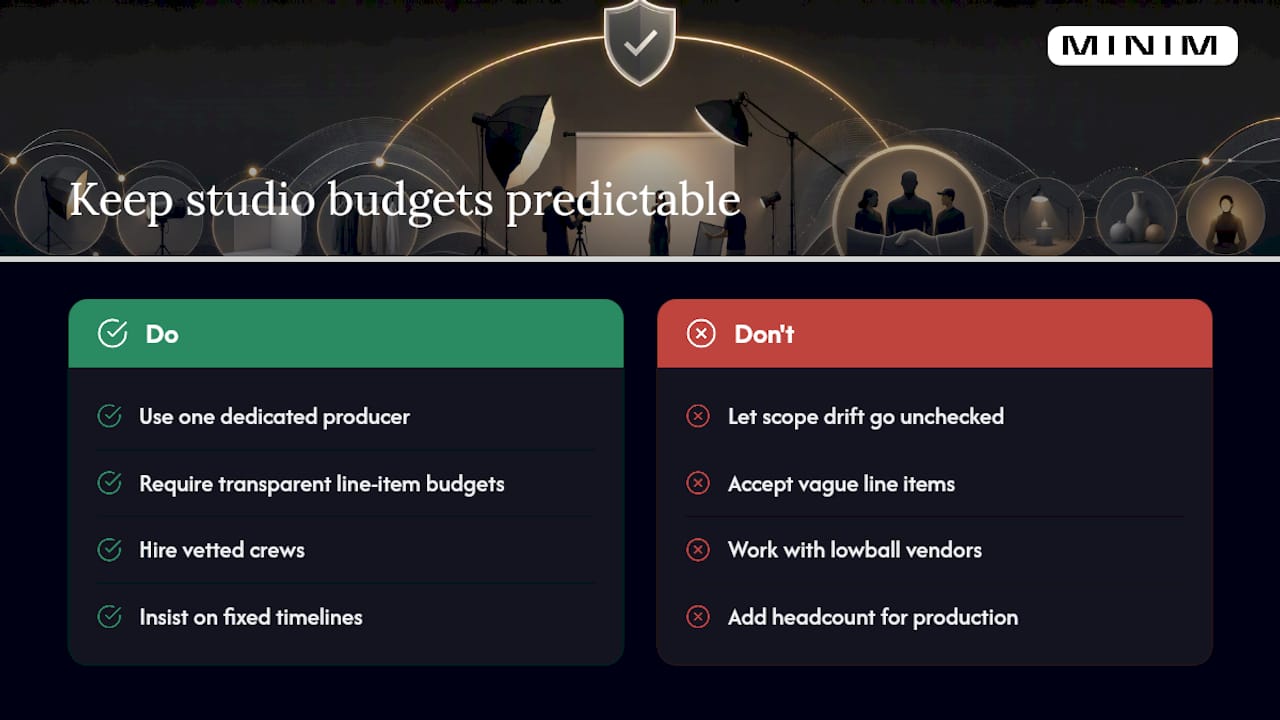
Agencies rarely lose money on the shoot itself. They lose it on scope drift, unclear line items, and vendors who quote low and change-order their way to the real number. That's the gap a strategic production partner is built to close.
MINIM integrates directly with agency creative teams to run end-to-end production, from creative development through final delivery, without adding headcount to your roster. A single producer manages vetted crews, transparent line-item budgets, and a fixed timeline, which is exactly the visibility procurement teams need when comparing bids. Case studies and client work on MINIM's portfolio show how that structure holds up across campaign types.
— Steven Reina
Ready to Scope Your Next Studio Shoot?
MINIM is the alternative to hiring a full production staff, you get a single accountable partner who handles creative strategy, studio production, and post-delivery without the overhead of expanding your internal team. Agencies working with MINIM get a transparent, line-item budget from the first conversation, a dedicated project manager, and delivery timelines that hold up against the schedule you gave your client.
That means fewer surprise change orders and a clearer answer when a client asks why a number moved. If your team is scoping a studio shoot right now, start with MINIM's services overview to see how a project-based engagement lines up against what you're currently budgeting, and request a quote before you finalize next quarter's production calendar.
Where These Numbers Come From
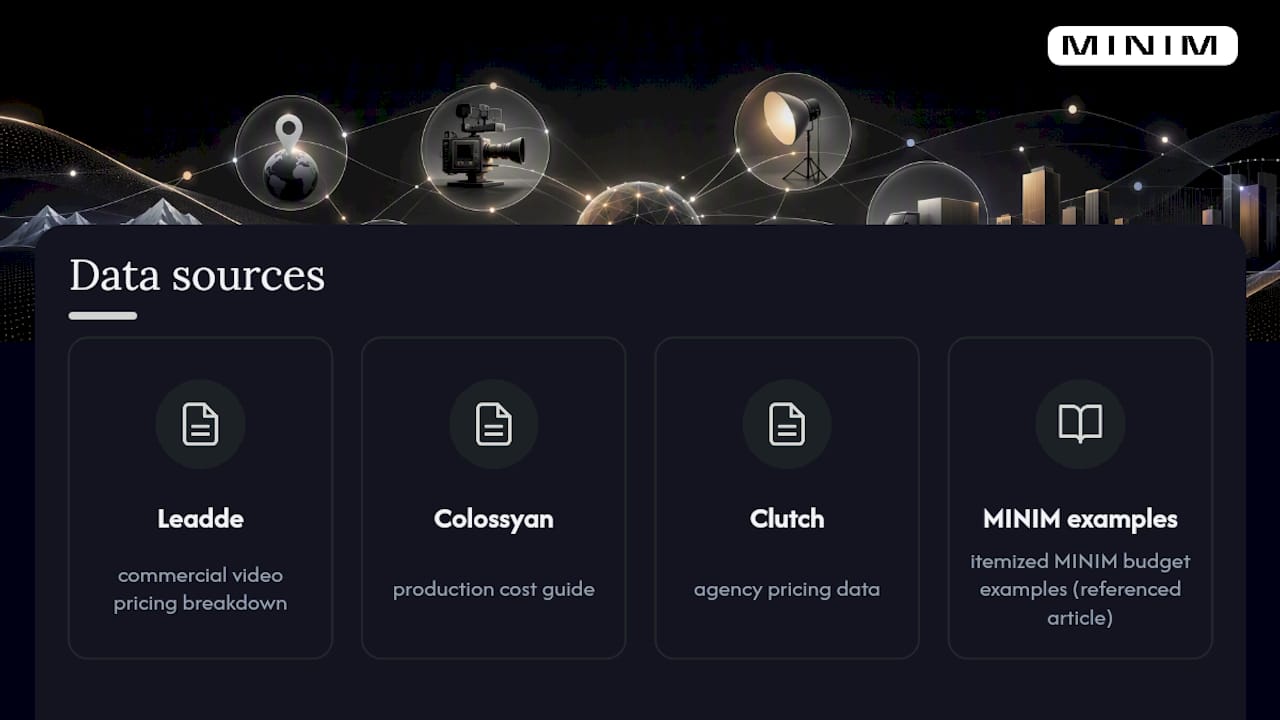
The budget ranges above draw on Leadde's commercial video pricing breakdown, Colossyan's production cost guide, and Clutch's agency pricing data. For itemized MINIM budget examples, see Commercial Video Cost: What US Budgets Actually Buy.
Sources
- How Much Does Commercial Video Production Really Cost? (2026 Pricing Breakdown) - Leadde Blog
- Video Production Costs: 2026 Pricing Guide | Colossyan
- Video Production Pricing Guide June 2026