
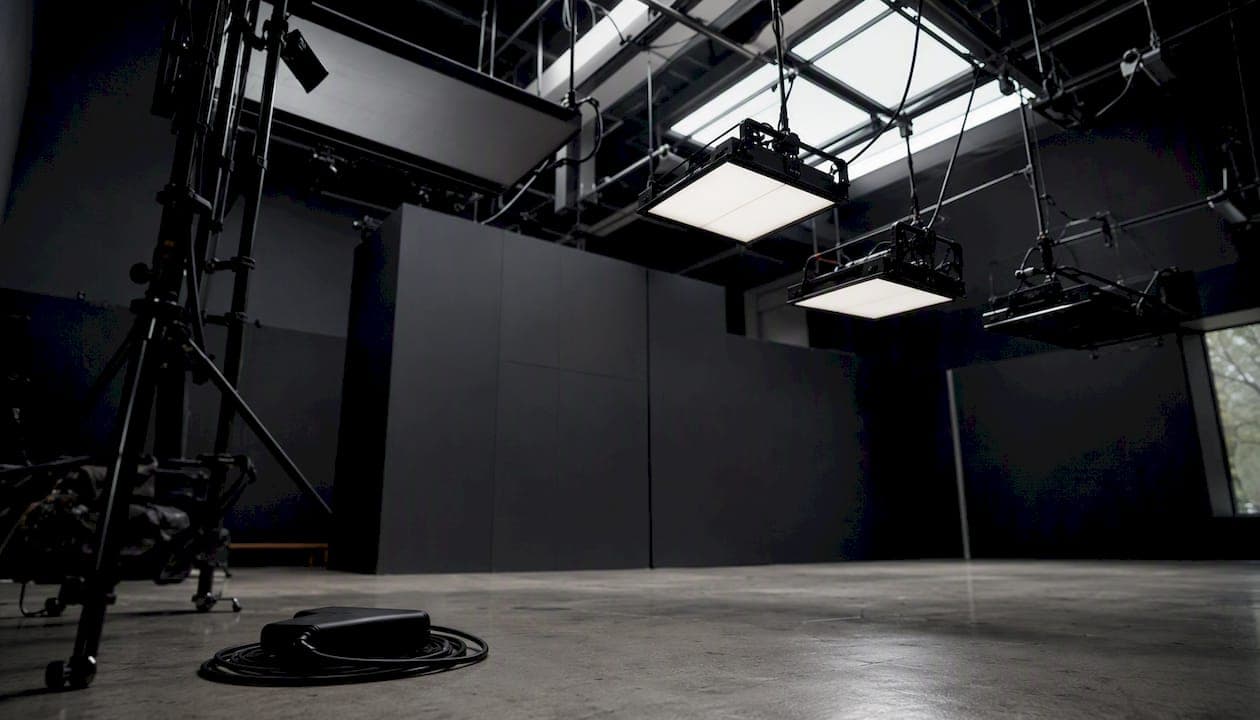
Sustainable video production is achievable right now, and the first move is not buying carbon offsets. It is measuring where your emissions actually come from, then locking in better choices on power, travel, and materials before the shoot date is set. Productions that start with those three levers consistently find the biggest reductions at the lowest cost. Here is what to do immediately:
- Run a quick carbon estimate. Use Green Toolkit to capture fuel, flights, freight, and grid electricity before pre-production closes.
- Switch to LED and battery power. Replace diesel generators with grid power or portable battery systems wherever the location allows.
- Localize travel decisions. Set a location radius in pre-production and default to ground transport for regional crew moves.
- Centralize catering with plant-forward options. One caterer, reusable serviceware, and a menu weighted toward plants cuts both food waste and emissions.
- Issue a Green Memo. A one-page commitment document signed by all crew establishes accountability from day one.
The EPA's sustainable manufacturing guidance frames this well: processes that minimize environmental impact tend to also lower resource costs and improve brand recognition. That logic applies directly to commercial production.
Pro Tip: Before any other action, spend 30 minutes mapping your last production's three biggest cost categories. Those categories almost always align with your three biggest emissions sources.
Key Takeaways
Sustainable video production is most cost-effective when measurement, power, travel, and materials decisions are locked in during pre-production, before the shoot plan is set.
| Point | Details |
|---|---|
| Measure first | Run a Scope 1–3 carbon estimate before location lock using Green Toolkit or a comparable calculator. |
| Electrify on set | Choose grid-accessible locations and LED lighting to eliminate diesel generator use and cut lighting power draw. |
| Localize travel | Set a location radius and default to ground transport in pre-production to eliminate most avoidable flights. |
| Circular gear and sets | Rent equipment, source secondhand wardrobe and props, and design modular sets for reuse across productions. |
| MINIM as production partner | MINIM integrates sustainability requirements from brief to delivery, providing documented footprints alongside final deliverables. |
Table of Contents
- How sustainable video production generates emissions and where to focus
- How to cut crew travel and transport emissions
- Powering the set: grid, generators, and battery systems
- Gear choices: rent, share, and extend equipment lifecycles
- Set construction, props, and wardrobe: circular sourcing in practice
- Sustainable catering and craft services on set
- Production office sustainability and digital workflow hygiene
- How to measure and report production carbon: scopes and tools
- U.S.-focused resources and tools for green production
- How to implement sustainability on a production: Green Memo, roles, and timeline
- How a production partner integrates sustainability: a MINIM-style workflow
- Why sustainability in commercial production is worth more than it costs
- MINIM brings sustainability into every production from day one
- Sources
How sustainable video production generates emissions and where to focus
Transport, energy, and materials are the three categories that account for the overwhelming majority of emissions on a typical commercial shoot. Crew flights and freight moves dominate the transport column. On-set energy breaks down into generator fuel, lighting load, and the compute hours burned in post-production. Materials cover set construction, props, wardrobe, and single-use catering items.
Prioritizing by impact-per-dollar means attacking transport first, then energy, then materials. A single transatlantic flight for a director can produce more CO₂ than a week of LED lighting on set. Diesel generators running 10-hour days at a remote location can exceed the emissions of a full week of post-production compute.
- Measure first. A rough footprint takes under an hour with a structured tool and immediately shows where effort pays off.
- Substitute where possible. Grid power for diesel, rail for short-haul flights, rechargeable batteries for single-use alkalines.
- Avoid what you can. Unnecessary location scouts, redundant freight runs, and last-minute air bookings are all avoidable with earlier planning.
The Sustainable Entertainment Alliance's Green Production Guide provides planning checklists and carbon calculators developed by studios specifically for this prioritization work.
Pro Tip: Profile your production's carbon hotspots by asking one question per category: "What would we do if this option cost three times as much?" The answers reveal which choices are truly fixed and which are just habits.
How to cut crew travel and transport emissions
Flights are the single highest-impact line item most productions can control. A few planning decisions made in pre-production can eliminate most of them.
- Set a location radius. Agree in pre-production that locations within a defined driving distance (typically 150–200 miles) default to ground transport. No exceptions without sign-off.
- Localize casting. Casting local talent reduces the need to fly principal performers. It also shortens turnaround and often improves authenticity.
- Consolidate multi-location shoots. Scheduling all locations in a geographic cluster before moving to the next reduces back-and-forth freight and crew travel.
- Default to rail for regional moves. Amtrak and regional rail options exist across the Northeast Corridor and parts of the West Coast. For a crew of 10, the emissions difference versus flying is substantial.
- Pool crew transport. Coordinate shared vehicles from a central pickup point rather than individual rideshares. EV or hybrid van rentals are widely available through Enterprise and similar national fleets.
- Consolidate freight. Plan all equipment moves in one load per direction. A second truck run to retrieve a forgotten case costs more in emissions than most people account for.
Pro Tip: Book locations and key crew at least six weeks out. Last-minute bookings are the primary driver of unavoidable flights. A six-week window almost always opens ground-transport alternatives that a two-week window closes.
Powering the set: grid, generators, and battery systems
The choice between mains power, a diesel generator, and a battery system is the single biggest on-set emissions decision a production makes. Grid power wins on emissions whenever it is available. In the U.S., grid electricity carbon intensity varies significantly by region, but even a coal-heavy grid typically outperforms a diesel generator running at partial load.
When grid power is not available, the options are hybrid generators (diesel with battery buffer) and standalone battery systems. Hybrid generators cut fuel consumption by running the diesel engine only when the battery bank needs recharging, rather than continuously. Standalone battery systems like those from Moxion Power are increasingly available for rental in major U.S. production markets.
- LED lighting. Switching from tungsten or HMI to LED reduces lighting power draw by 50–75% and cuts heat load, which also reduces HVAC demand on interior locations.
- Camera and monitor power management. Set monitors to auto-sleep and use proxy recording workflows to reduce storage and compute load during production.
- Proxy workflows in post. Editing on proxies rather than full-resolution files cuts the compute hours and server energy required during post-production.
Localizing shoots to grid-accessible locations typically reduces generator use and can cut on-set fuel emissions significantly compared to remote diesel-powered shoots, per the Sustainable Entertainment Alliance's toolkit.
Pro Tip: Stage battery hire across shoot days rather than booking a single large system for the full run. A smaller system that recharges overnight from the grid is often cheaper and lower-impact than a generator running continuously.
Gear choices: rent, share, and extend equipment lifecycles
Buying new equipment embeds the carbon cost of manufacturing, shipping, and packaging into every production. Renting from an established house spreads that embodied carbon across dozens of productions. For most commercial shoots, renting is the lower-impact choice by a wide margin, and it also eliminates the problem of equipment sitting idle between projects.
- Rent first, buy only for core kit. Camera bodies, lenses, and specialty rigs are strong rental candidates. Only buy equipment that will be in use on more than 70% of your productions.
- Prioritize energy-efficient models. When evaluating rental houses, ask about the power draw of lighting and camera systems. The EPA's guidance on greener electronics provides a framework for evaluating energy performance.
- Use rechargeable batteries throughout. V-mount and Gold Mount systems, rechargeable AA and AAA batteries for wireless systems, and USB-C rechargeable units for accessories. Dispose of spent batteries through Call2Recycle's locator service.
- Standardize mounts and plates. A single plate standard across your kit means fewer adapters, less redundancy, and easier sharing between productions.
- Evaluate rental houses on sustainability criteria. Ask whether they track equipment energy ratings, offer EV delivery, or participate in any industry sustainability programs.
Pro Tip: Build a short vendor questionnaire (five questions, one page) that you send to every rental house. Vendors who respond thoughtfully are more likely to be reliable partners on sustainability commitments.
Set construction, props, and wardrobe: circular sourcing in practice
Set builds are one of the most wasteful activities in commercial production. A set constructed for a two-day shoot and then sent to landfill represents a significant and entirely avoidable impact. The fix is not complicated; it requires earlier planning and a few procurement rules.
- Design sets to be modular. Panels, flats, and platforms that can be disassembled and reused across multiple productions cost roughly the same to build as single-use sets.
- Rent before you build. Prop houses and set rental companies in major U.S. markets carry extensive inventory. Check availability before commissioning custom builds.
- Source secondhand wardrobe. Thrift stores, costume rental houses, and online platforms carry most of what a commercial wardrobe department needs. Textile Exchange's preferred production systems guidance recommends prioritizing low-climate-impact fibers and designing for longevity when new purchases are unavoidable.
- Avoid PVC and expanded polystyrene. Both are difficult to recycle and release harmful compounds during production and disposal. Alternatives include cardboard, timber, and fabric-covered frames.
- Use local materials. Sourcing lumber, paint, and hardware locally reduces freight emissions and supports regional suppliers.
- Track and rehome everything. Maintain a simple inventory of set pieces and props. At wrap, donate usable items to theater companies, schools, or prop houses rather than disposing of them.
Pro Tip: Assign one art department crew member as the "materials coordinator" responsible for tracking procurement and post-shoot disposition. Without a named owner, rehoming happens inconsistently.
Sustainable catering and craft services on set
Food is where crew satisfaction and sustainability intersect most visibly. A plant-forward menu with local sourcing is not a sacrifice; it is a procurement decision that reduces both emissions and food waste when planned correctly.
- Default to plant-forward menus. Meat production, particularly beef, carries a significantly higher carbon footprint per serving than plant-based alternatives. A menu with mostly plant-based options and a small amount of quality meat satisfies most crews without compromise.
- Source locally and seasonally. Work with caterers who can demonstrate local sourcing. Shorter supply chains reduce transport emissions and often improve freshness.
- Plan portions carefully. Over-ordering is the primary driver of food waste on set. Provide accurate crew counts 48 hours before each shoot day and build in a 10% buffer, not 30%.
- Eliminate single-use plastics. Reusable plates, cups, and cutlery are available through catering rental companies. The upfront cost is offset by the elimination of daily disposable purchases.
- Compost food waste. Many U.S. cities now offer commercial composting pickup. Confirm availability with your location's waste hauler during pre-production.
When vetting caterers, ask directly: Do you source from local farms? Do you have a waste diversion plan? Can you provide composting on-site or arrange pickup?
Pro Tip: Communicate your sustainability goals to the caterer in writing at the time of booking, not the week before the shoot. Caterers who receive clear requirements early can source appropriately; those who receive them late default to their standard menu.

Production office sustainability and digital workflow hygiene
The production office generates a quieter but persistent footprint through procurement, printing, digital storage, and supplier choices. These are also the easiest areas to address with policy rather than capital investment.
- Prefer suppliers with sustainability commitments. When sourcing office supplies, equipment, and services, ask vendors for their environmental policy. This takes five minutes and signals your priorities.
- Go paperless on production documents. Tools like Scriptation eliminate the need to print script revisions. A 100-page script reprinted for 20 crew members across five revision cycles is 10,000 pages. Digital distribution costs nothing.
- Use proxy workflows and efficient cloud settings. Cloud compute and storage carry a real energy cost. Set auto-delete policies for redundant files, use compressed proxies for review, and archive masters to cold storage rather than keeping them on active servers.
- Centralize inventory across productions. Shared consumables (tape, batteries, expendables) stored centrally reduce redundant purchasing and packaging waste.
- Choose production management software that supports digital approvals. Eliminating paper call sheets, purchase orders, and release forms is a straightforward win.
Pro Tip: Set a "print only if essential" rule in the production office and make digital script annotation (via Scriptation or similar) the default. The behavior change is immediate and costs nothing.
How to measure and report production carbon: scopes and tools
Carbon accounting for productions follows the same three-scope framework used in corporate reporting. Understanding which scope covers which activity tells you what to measure and what emission factors to apply.
- Scope 1: Direct emissions. Fuel burned by production-owned or rented vehicles and generators. Measure in gallons of diesel or gasoline and apply EPA emission factors.
- Scope 2: Purchased electricity. Grid electricity consumed at locations, studios, and the production office. Measure in kilowatt-hours and apply the regional grid emission factor from the EPA's eGRID database.
- Scope 3: Supply chain and indirect emissions. Flights, freight, hotel stays, catering supply chains, and purchased materials. This is typically the largest scope for commercial productions and the hardest to measure precisely.
For a minimal measurement approach, capture these inputs: fuel receipts, flight itineraries, freight manifests, electricity bills, and a rough materials inventory. Apply default emission factors from the EPA or the GHG Protocol. The result is an order-of-magnitude footprint that is accurate enough to set targets and track progress.
Green Toolkit structures this process and produces reporting outputs aligned with verified methodologies including ISO 14067, making it suitable for corporate reporting requirements. NYC Film Green offers a Film Green Seal for qualifying productions and runs Office Hours webinars on carbon calculating and sustainable power.
Pro Tip: Use verified methodologies from the start if your client has corporate sustainability reporting requirements. Retrofitting a footprint calculation to meet a specific standard after the fact is significantly more work than capturing the right data inputs during production.
| Scope | What it covers | Key data inputs |
|---|---|---|
| Scope 1 | Generator fuel, production vehicles | Fuel receipts, mileage logs |
| Scope 2 | Grid electricity at all locations | Electricity bills, kWh by location |
| Scope 3 | Flights, freight, hotels, materials | Flight itineraries, freight manifests, spend data |
U.S.-focused resources and tools for green production
The following resources are available to U.S. productions right now, at no cost or low cost, and cover the full range of planning, measurement, and certification needs.
- Green Toolkit: Production-level carbon tracking software with verified methodology support. Use during pre-production to set a baseline and throughout the shoot to track actuals. Suitable for corporate reporting.
- NYC Film Green: Voluntary city program offering the Film Green Seal and free Office Hours webinars. Use for certification on New York productions and as a model for sustainability program participation elsewhere.
- Sustainable Entertainment Alliance Green Production Guide: Studio-created checklists, calculators, and templates. Use in pre-production planning and for department-level implementation guidance.
- EPA Sustainable Manufacturing guidance: Foundational framework for integrating sustainability into production processes. Use when building internal policy or justifying sustainability investment to clients.
- Call2Recycle locator: Find battery and electronics recycling drop-off points near any U.S. production location. Use at wrap to handle rechargeable batteries and e-waste responsibly.
- EPA Greener Electronics guidance: Framework for evaluating equipment energy performance. Use when selecting rental houses or purchasing production equipment.
- EcoSet: A U.S.-based sustainable production service that provides on-set waste diversion, recycling coordination, and sustainability reporting. Use for productions that need hands-on waste management support.
Pro Tip: Download the Sustainable Entertainment Alliance's department checklists and attach them to your production's creative brief template. That single step embeds sustainability into every project from the first planning document.
The Sustainable Entertainment Alliance toolkit was developed by studios and industry professionals, which means its templates reflect real production workflows rather than theoretical frameworks.
How to implement sustainability on a production: Green Memo, roles, and timeline
Implementation fails when sustainability is treated as a single person's responsibility. The Green Filming Manual recommends drafting a Green Memo at project start and distributing sustainability tasks across departments. That approach works because it makes every department head accountable for their own footprint rather than delegating everything to one coordinator.
The Green Memo
A Green Memo is a one-page document issued at the start of pre-production. It states the production's sustainability commitments and is signed by all crew. Core elements to include:
- Travel policy (location radius, ground transport default, flight approval process)
- Catering commitments (plant-forward menu, reusable serviceware, no single-use plastics)
- Waste targets (recycling stations on set, composting where available, zero landfill goal for set materials)
- Power policy (LED lighting standard, generator use approval process, battery preference)
- Procurement rules (rent before buy, local sourcing preference, secondhand wardrobe first)
A signed Green Memo establishes clear, accountable commitments and improves on-set compliance across all departments.
Role assignments
- Green Producer: Owns the overall sustainability plan, budget line items, and final reporting. Usually the line producer or a dedicated sustainability producer on larger shoots.
- Green Runner: On-set point of contact for waste sorting, catering compliance, and crew questions. Often a PA with a specific brief.
- Department Heads: Each owns the Green Memo commitments for their department (art, wardrobe, transport, catering).
Timeline and budget
| Phase | Sustainability tasks | Typical budget line items |
|---|---|---|
| Pre-production | Carbon estimate, Green Memo, location vetting, caterer briefing | Carbon calculator subscription, sustainability coordinator fee |
| Production | On-set waste diversion, battery/LED hire, crew transport coordination | Battery system rental, EV van hire, reusable serviceware |
| Post-production | Final footprint calculation, offset procurement, reporting | Carbon offset purchase, reporting tool fee |
Retrofitting sustainability mid-project, as the EPA's guidance notes about manufacturing processes generally, is less efficient and more expensive than integrating it early.
Pro Tip: Include the Green Memo as a standard attachment to your video creative brief template. When sustainability requirements arrive with the brief, they are treated as production requirements, not afterthoughts.
How a production partner integrates sustainability: a MINIM-style workflow
A mid-size commercial shoot for a consumer brand illustrates how these practices combine in practice. In pre-production, the production team set a 150-mile location radius, cast locally, and selected a studio with grid power access, eliminating the need for a diesel generator entirely.
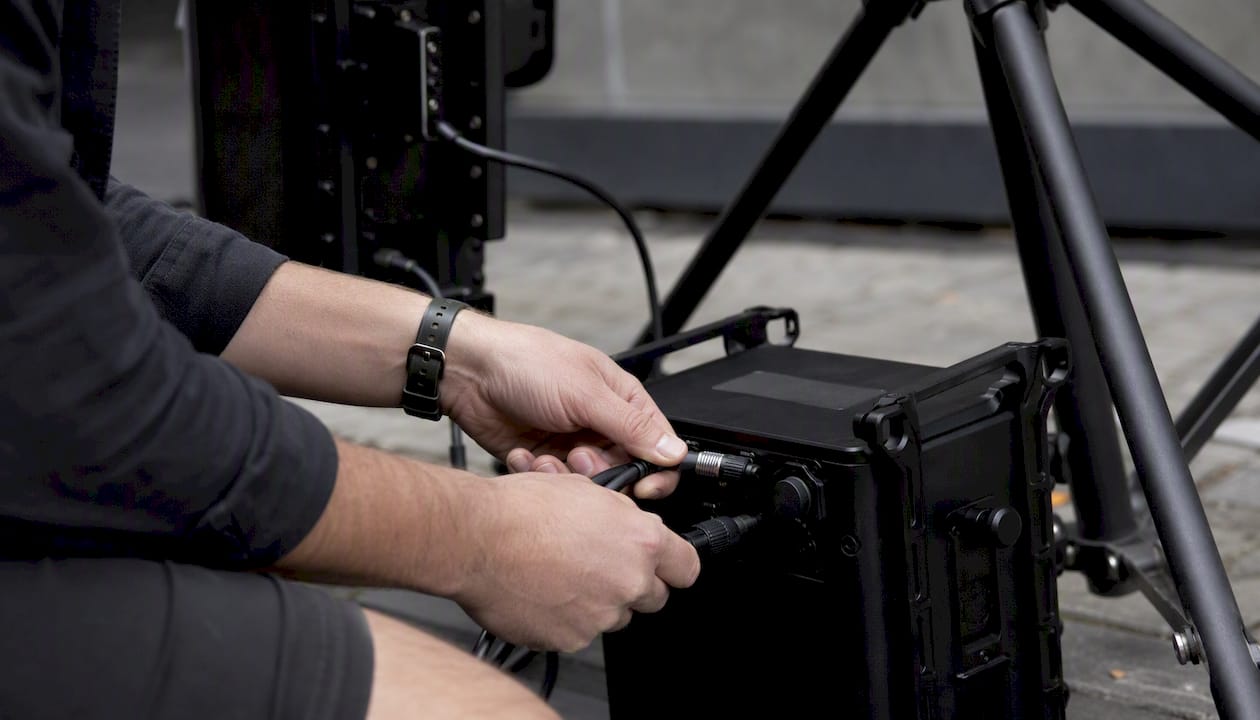
A plant-forward catering menu with reusable serviceware eliminated single-use plastics across three shoot days. Crew transport was consolidated into two EV vans from a central pickup point.
Key outcomes from this approach:
- Generator fuel eliminated entirely through grid-power location selection
- Art department materials costs reduced through rental and secondhand sourcing
- Post-shoot set materials donated to a regional theater company, diverting them from landfill
- Carbon footprint documented using Green Toolkit for client sustainability reporting
Integrating sustainability from pre-production rather than retrofitting it at wrap is what makes the difference between a production that reports a lower footprint and one that actually achieves it. The decisions that matter most, location, power source, and travel, are all made before the first shoot day.
MINIM's full-service production capabilities include the planning infrastructure to embed these decisions into every project from brief to delivery, without adding headcount to the agency team.
Pro Tip: Ask your production partner to include a sustainability section in the production report alongside the standard budget reconciliation. Clients who receive that data once will expect it on every subsequent project.
Why sustainability in commercial production is worth more than it costs
The conventional wisdom is that sustainable production costs more and delivers less. That framing is wrong, and it is worth being direct about why.
The productions that report the highest sustainability costs are almost always the ones that tried to retrofit green practices after the shoot plan was already locked. They paid for offsets they could have avoided, rented battery systems at short notice at premium rates, and scrambled to find composting vendors the week before wrap. The cost of sustainability in those cases is real, but it is the cost of poor planning, not the cost of sustainability itself.
Productions that integrate sustainability from the brief stage consistently find that the biggest interventions, localizing locations, switching to grid power, cutting flights, and centralizing catering, either save money or cost marginally more than their conventional equivalents. The LED lighting bill is lower than the tungsten bill. The local caterer with a plant-forward menu is often cheaper per head than a conventional craft services truck. The battery system rental costs more than a generator day rate, but eliminates fuel costs and the logistics of fuel delivery.
There is also a client-facing dimension that agencies increasingly cannot ignore. Procurement teams at major brands now include sustainability criteria in production vendor evaluations. A production partner who can provide a documented carbon footprint and a Green Memo is not just doing the right thing; they are meeting a procurement requirement that competitors without that capability cannot satisfy.
Sustainability also functions as a creative constraint in the best sense. Localizing a shoot forces the creative team to find locations they might not have considered. A plant-forward catering brief opens conversations about the brand's values that a standard craft services order never would. These are not compromises; they are the kind of productive friction that tends to produce better work.
MINIM brings sustainability into every production from day one
Agencies that need cinematic commercial execution without expanding internal headcount get exactly that from MINIM. The production infrastructure, from brief to final delivery, is built to absorb sustainability requirements as standard inputs rather than special requests. That means a Green Memo in the creative brief, a carbon estimate before location lock, and a documented footprint delivered alongside the final cut.

MINIM's production and creative services cover the full scope: creative strategy, art direction, film, photography, 2D/3D visual effects, and in-house studio work, all integrated directly with your agency team. If your next campaign needs to meet a client's sustainability reporting requirement or simply needs to be produced with less waste and lower emissions, the conversation starts with a brief. See MINIM's work and reach out to discuss a sustainability-first production plan.
Sources
- Sustainable Manufacturing | US EPA
- Green Filming Manual (English version) | FAMU
- NYC Film Green - MOME
- Green Toolkit – Software for Sustainable Film & TV Production
- Green Production Guide | Sustainable Entertainment Alliance
- Preferred production systems guidance | Textile Exchange