
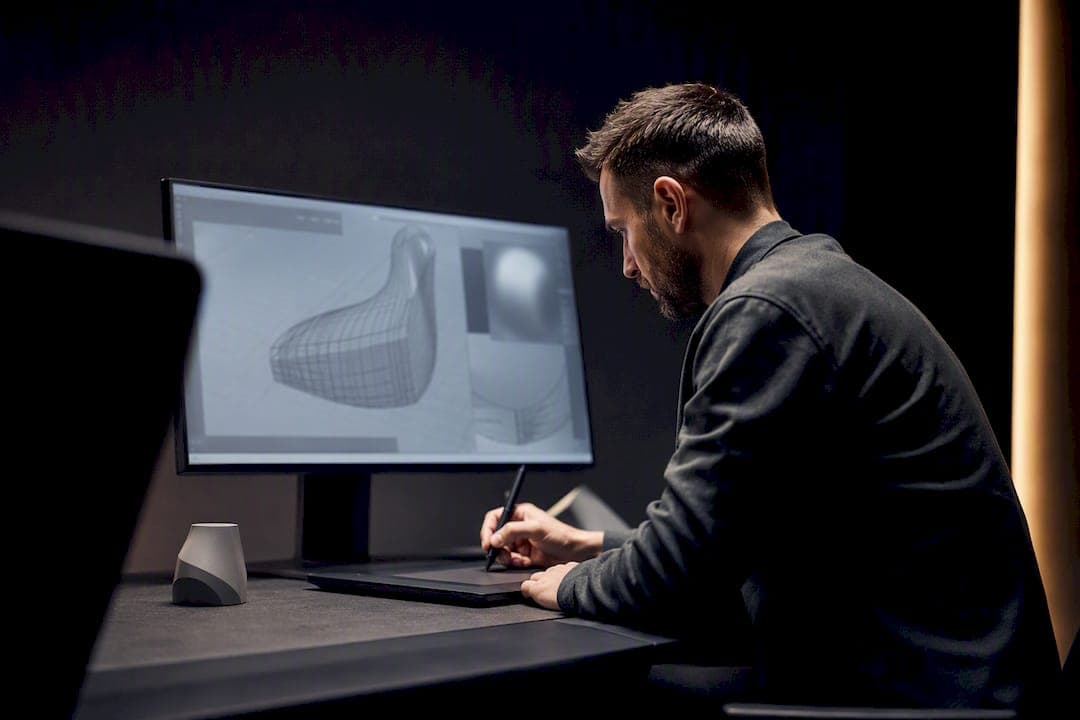
Expect to pay $99 to $300 per image for a simple white-background render, $400 to $1,500 or more for a luxury, high-fidelity hero shot, and $450 to $1,200 for a 360° spin. Short animations generally cost significantly more than static renders. Modeling and material complexity, not the rendering itself, decide where your project lands in that range, and most vendors quote those two pieces separately from the per-image fee.
TL;DR:
- Modeling fees are the main driver of costs, ranging from $200 to $800 per product depending on complexity.
- Material and shading complexity, especially for transparent or reflective surfaces, significantly increase preparation and render passes.
- Adding lifestyle scenes, environment props, or complex lighting can double or triple the overall project budget.
- Volume discounts are common for large catalogs, reducing per-image costs after the initial modeling investment.
- Accurate quotes require detailed scope, including final use, variants, and licensing, with clear itemization to avoid hidden costs.
Table of Contents
- What Do 3D Product Renders Cost in 2026?
- What Actually Drives the Price of a 3D Render
- Per Image, Per Project, Hourly, or Retainer: Which Pricing Model Fits?
- Sample Budgets and Timelines You Can Use for Approvals
- How to Brief a Vendor and Get a Quote You Can Actually Compare
- When It's Worth Paying an Agency Premium
- What the Pricing Guides Don't Tell You
- Get a Line-Item Quote for Your Next Render Project
- Where These Numbers Come From
- Sources
What Do 3D Product Renders Cost in 2026?
The price of a 3D product render depends almost entirely on how much modeling and lookdev work the product demands before a single frame gets rendered. A simple product with clean geometry and matte materials, photographed against a white background, sits at the low end of the market. A watch with faceted glass, a cosmetics bottle with translucent liquid, or a handbag with stitched leather sits at the high end, sometimes by a factor of ten.
Here's how the 2026 market breaks down by render type:
- White background / silo shots: commonly range in cost per image, for straightforward products with simple materials, according to pricing data from Rapid Renders.
- Mid-complexity lifestyle renders: typically fall within a broad range per image, covering staged scenes, props, and moderate material work, based on aggregated studio data from Rapid Renders' full pricing guide.
- Luxury / high-fidelity hero shots: generally command higher prices per image, reserved for jewelry, spirits, cosmetics, and other categories where surface realism carries the brand.
- Short product animations: priced well above static renders, since motion multiplies the render time per frame and often demands additional lookdev passes.
Quotes for the same brief can vary significantly across providers, reflecting differences in scope, complexity, and invoice structure. It reflects real differences in scope: geometry complexity, how many materials need custom shading, how many revision rounds are baked in, and whether modeling is bundled or billed as a separate line item, per NewYorkCGI's 2026 pricing breakdown. A vendor quoting $75 a render and one quoting $600 might be pricing the identical asset, just structuring the invoice differently.
Modeling fees typically run $200 to $800 per product, and that figure alone explains most of the confusion brands run into when comparing bids. Ask two studios for a quote on the same product, and if one includes modeling in the number and the other doesn't, you're not comparing prices at all. You're comparing incomplete quotes.
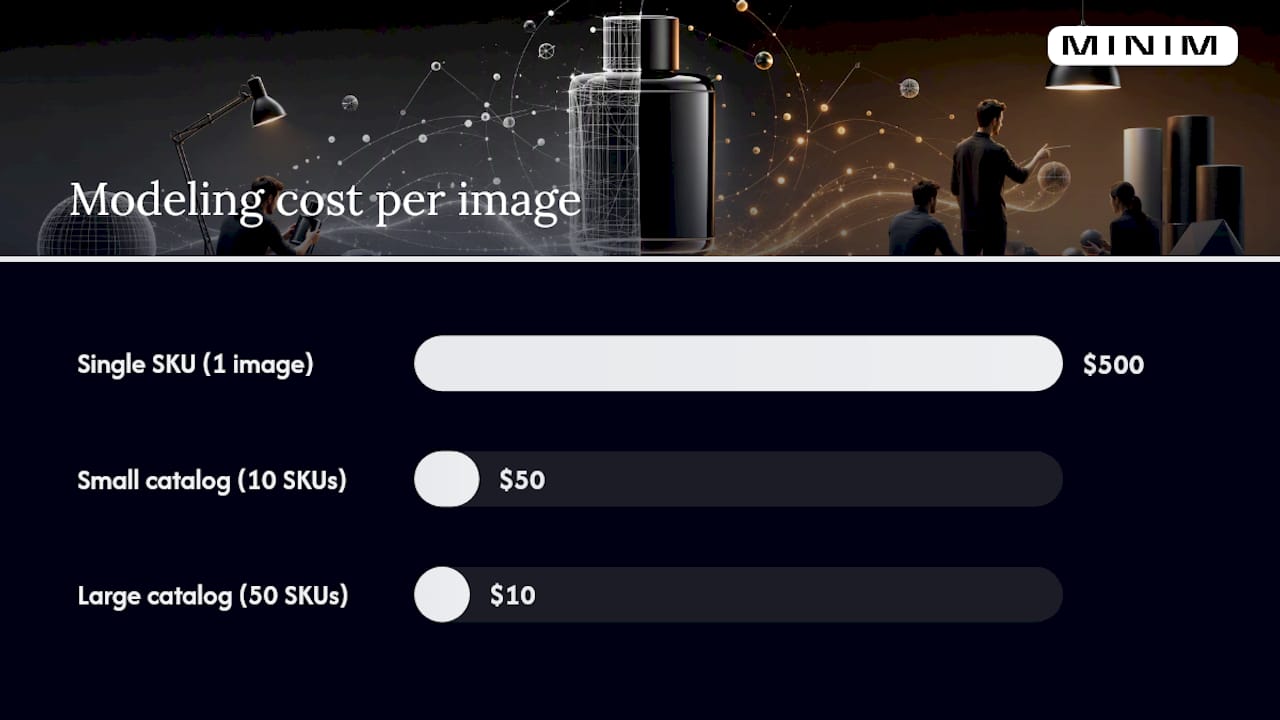
Pro Tip: If you're pricing out a catalog of 50-plus SKUs, ask your vendor directly what the per-image rate drops to after the first 10 images. That number tells you more about your real budget than the headline price per render.
What Actually Drives the Price of a 3D Render
The render itself is rarely the expensive part. Four factors do almost all the work in determining where your quote lands.
- Modeling. Whether it's charged once or bundled in, modeling is usually the single largest line item on a render quote. A simple geometric product (a box, a can, a bottle with flat sides) takes an artist a few hours. A product with intricate mechanical parts, fabric folds, or organic curves can take days. That cost gets amortized across every variant and angle you eventually need, which is why brands producing five colorways of the same product pay far less per image than brands needing five completely different products modeled from scratch.
- Material and shading complexity. Glass, liquids, gems, wet surfaces, and fine fabric weave all demand iterative lookdev, the back and forth of adjusting a material until it looks convincingly real under studio lighting. Lauktien Studio's brand guide notes that material complexity drives cost more than scene scale alone, largely because refractive and translucent materials require far more render passes and artist review cycles than a matte plastic surface does.
- Scene building versus silo shots. A product floating on white background is computationally simple. The moment you add a lifestyle scene, background props, ambient lighting, and shadows that interact with a real-feeling environment, you've added a second layer of modeling and lighting work on top of the product itself.
- Revisions, turnaround, and licensing. Most quotes include a set number of revision rounds, often two or three, before extra rounds start billing separately. Rush turnaround (getting a render in three days instead of two weeks) typically carries a surcharge. Output resolution and format (print-ready 4K files versus web-optimized JPEGs) can also shift price, and exclusive licensing, where you own the model outright versus a limited-use license, adds cost on top of everything else.
Pro Tip: Ask specifically whether your quote includes source file ownership. Some studios license the rendered images but retain the 3D model itself, which means you'll pay full modeling fees again if you switch vendors for your next campaign.
Per Image, Per Project, Hourly, or Retainer: Which Pricing Model Fits?
Vendors structure pricing in four common ways, and picking the wrong one for your project type is one of the easiest ways to overpay or get an inaccurate quote.
- Per image: the most predictable model for straightforward catalog work. You know your budget per SKU, which makes internal approvals easy. The caveat: confirm whether modeling is included in that per-image number or billed separately, since that's where "predictable" pricing quietly becomes unpredictable.
- Per project: better suited to campaign work spanning multiple formats, hero shots, lifestyle scenes, and a short animation bundled into one deliverable. Studios often price these as a package because the modeling and lookdev investment gets shared across every output.
- Hourly: rare for standard product renders but common for open-ended or experimental briefs, like exploring a new visual style before committing to a full campaign look. Hourly billing shifts risk toward the client, so it only makes sense when the scope genuinely isn't defined yet.
- Retainer or volume packages: the strongest long-term option for ongoing e-commerce catalogs or brands launching new SKUs every quarter. Negotiated per-SKU rates under a retainer consistently produce the best unit economics, since the model investment gets reused across every future variant and angle, according to 360render.
If you're commissioning a single hero image, per-image pricing is fine. If you're building a full campaign with renders, animation, and lifestyle scenes that all need to look like they belong to the same visual language, per-project pricing usually saves you from a fragmented result. If your catalog grows every month, a retainer beats one-off quotes every time.
Sample Budgets and Timelines You Can Use for Approvals
Here's what real line-item budgets tend to look like across common briefs, combining modeling, per-image fees, and typical delivery windows.
| Brief type | Modeling fee | Per-image / project fee | Typical turnaround |
|---|---|---|---|
| Simple hero shot, white background | $200–$400 | $99–$300 | 3–6 business days |
| Lifestyle hero shot with scene | $300–$600 | $400–$800 | 1–2 weeks |
| 360° spin, 24–72 frames | $300–$450 (often shared with hero model) | $450–$1,200 total | 1–2 weeks |
| Short animation (around 10 seconds) | $400–$800 | Priced above static renders, project basis | 2–3 weeks |
| 50-SKU catalog (silo shots) | Amortized across SKUs | 10–30% discount off standard per-image rate | 3–4 weeks |
A few things worth flagging in that table. The 360° spin's modeling fee is often shared with the hero shot line, since it's the same base model rendered from more angles, another reason master-model reuse matters so much for your total spend. Rush turnaround options usually incur surcharges, often from about a quarter to half again the standard quote, so planning sufficient lead time helps manage costs.
The volume at which CGI generally becomes more cost-effective than traditional photography varies but often occurs when producing multiple SKUs depending on product variation. Below that volume, photography can still be competitive. Above it, the amortized modeling cost of 3D usually wins.
How to Brief a Vendor and Get a Quote You Can Actually Compare
Getting an accurate quote starts with what you hand the vendor, not what you ask them to guess. Four inputs make the difference between a quote that holds and one that balloons after the fact.
- State the final use. Web thumbnails need less resolution and less lighting precision than a print campaign or a trade show display. Say exactly where the image is going.
- List every angle and variant up front. "We need the product in five colorways, front and three-quarter view" is a quote a vendor can price accurately. "We'll figure out variants later" is a quote that changes the moment you add SKU number six.
- Provide visual references. Competitor renders, mood boards, or even a rough sketch of the desired lighting mood save entire revision rounds, according to Rapid Renders' briefing guide.
- Give a firm deadline. Vague timelines invite vague quotes, and rush fees applied after the fact cost more than rush fees negotiated up front.
Once you've handed those over, insist on a line-itemed quote: modeling fee, per-image fee, revision allowance, and licensing terms as separate figures, not one bundled number. Vendors that advertise a low per-image price sometimes omit modeling entirely, and that fee shows up later as a surprise addition.
Pro Tip: Ask explicitly who owns the 3D model file after delivery. If the studio retains it, get that in writing along with what a future re-render would cost, so you're not blindsided on your next campaign.
Red flags worth watching for: a quote with no mention of revision limits, vague language around "final files," or a per-image rate that seems far below the market range with no explanation of what's excluded. If a number looks too good, ask what it's missing before you sign.
When It's Worth Paying an Agency Premium
Agencies often charge substantially more than freelancers for the same brief. It's also, in most cases, buying something specific: project management that catches problems before they become expensive re-renders, creative direction that keeps five different assets looking like one campaign, and technical risk mitigation on complex materials that a single freelancer might get wrong on the first pass, according to Lauktien Studio.
That premium matters most on jobs with real coordination complexity, a multi-format campaign, a tight launch date, or a brief where the visual consistency across ten SKUs matters more than the cost of any single render. For a single hero shot with no downstream dependencies, a freelancer is often the more efficient choice.
Fewer revision cycles, a consistent visual language across every deliverable, and on-time delivery for campaign windows that don't move: that's what the agency premium is actually buying, not just polish on the render itself.
MINIM works as an integrated production partner rather than a vendor taking orders. That means model ownership, deliverable formats, and licensing terms get defined before work starts, not negotiated after a surprise invoice arrives. For teams running ongoing catalog or campaign needs, retainer structures are scoped around SKU volume and turnaround expectations rather than one-off per-image guesses. Reviewing recent work delivered for agency clients gives a clearer sense of how that scoping plays out on real briefs.
What the Pricing Guides Don't Tell You
Most pricing guides treat 3D render cost as a lookup table: pick your category, read the number. The real story is that modeling and material complexity swing your final cost more than any category label does, and most brands underestimate that until they've already committed to a launch date.
The conventional advice, "get three quotes and pick the middle one," falls apart when the quotes aren't measuring the same thing. A $150 quote missing modeling and a $600 quote including it aren't three data points on a spectrum. They're two different offers dressed up to look comparable.
What should come first isn't the number. It's the line-item breakdown. Brands that get modeling, per-image fees, revisions, and licensing itemized separately end up with cleaner budgets and fewer surprise invoices than brands that chase the lowest headline price. The gap between what a vendor advertises and what actually lands on the invoice is where most render budgets quietly blow past their approval.
— Steven Reina
Get a Line-Item Quote for Your Next Render Project
MINIM builds 3D product renders and full campaign assets as part of an integrated production process, working directly alongside your creative team rather than as a disconnected vendor filling a single request. That means the modeling, material work, and revision scope get defined up front, so your budget approval matches what actually lands on the final invoice.
If your team is scoping a hero shot, a full catalog, or a campaign that pairs renders with film and photography, MINIM's production services cover the range without you needing to piece together separate vendors for each format. Reach out for a line-itemed quote that breaks out modeling, per-image fees, and licensing before you commit to a number, so there's nothing to renegotiate once the work is underway.
Where These Numbers Come From
The price ranges and cost breakdowns in this guide draw from current market pricing data and industry write-ups covering 3D product rendering in 2026:
Product Rendering: The Complete Guide (2026) | Rapid Renders
How Much Does 3D Product Rendering Cost in 2026? | NewYorkCGI
3D Product Rendering Cost Guide: Pricing & Factors [2025] | 360render
3D product visualization cost: 2026 brand guide | Lauktien Studio
How Much Does 3D Rendering Cost in 2026? Full Price Guide | Rapid Renders
For teams weighing how much visual production to build in-house versus outsource, Assets offers a broader look at where that decision typically lands.
Sources
- Product Rendering: The Complete Guide (2026) | Rapid Renders
- How Much Does 3D Product Rendering Cost in 2026? | NewYorkCGI
- 3D product visualization cost: 2026 brand guide | Lauktien Studio