
Every professional mix needs to satisfy four reference points: ITU-R BS.1770 for the measurement algorithm, ATSC A/85 for US broadcast at −24 LKFS (±2 LU), EBU R128 for international delivery at −23 LUFS, and Netflix's dialog-gated −27 LKFS spec for streaming. True peak should stay at or below −2 dBTP for broadcast and around −2.3 dBFS on Atmos or streaming rerenders, monitored at 79, 82, or 85 dB SPL depending on the room. The CALM Act, enforced through the FCC, ties commercial loudness to these same ATSC targets.
TL;DR:
- Mixing must meet specific loudness targets: ATSC A/85 at -24 LKFS, EBU R128 at -23 LUFS, and Netflix at -27 LKFS, with true peak limits of -2 to -1 dBTP.
- Monitoring levels must be calibrated to a consistent SPL (79, 82, or 85 dB) depending on the platform, with regular recalibration to avoid ear fatigue and room bias.
- Encoded files require accurate metadata, like dialnorm for broadcast, and true peak limits are crucial to prevent post-encode clipping and QC failures.
- Platforms normalize loudness on playback, so mixing with headroom rather than loudness maximization ensures consistent perceived loudness across devices.
- A rigorous quality assurance process, including test encoding and detailed measurement logging, minimizes last-minute rework and protects the creator's intent.
Table of Contents
- Key Audio Mix Standards and What Each One Requires
- LUFS, LKFS, LRA, and True Peak: What Each Meter Reading Tells You
- Setting Up a Monitoring Environment You Can Trust
- Deliverable Requirements Across Broadcast, Streaming, Theatrical, and Immersive Platforms
- A Step-By-Step Checklist for Hitting Standards Before Delivery
- How MINIM Approaches QA on Every Deliverable
- Why Standards Compliance Protects Creative Intent, Not Just QC Scores
- Get Standards-Compliant Mixes Without Adding Headcount
- Reference Specs Worth Bookmarking
- Sources
Key Audio Mix Standards and What Each One Requires
Four organizations set the numbers that actually govern your delivery, and mixing up which one applies to which platform is the fastest way to fail QC.
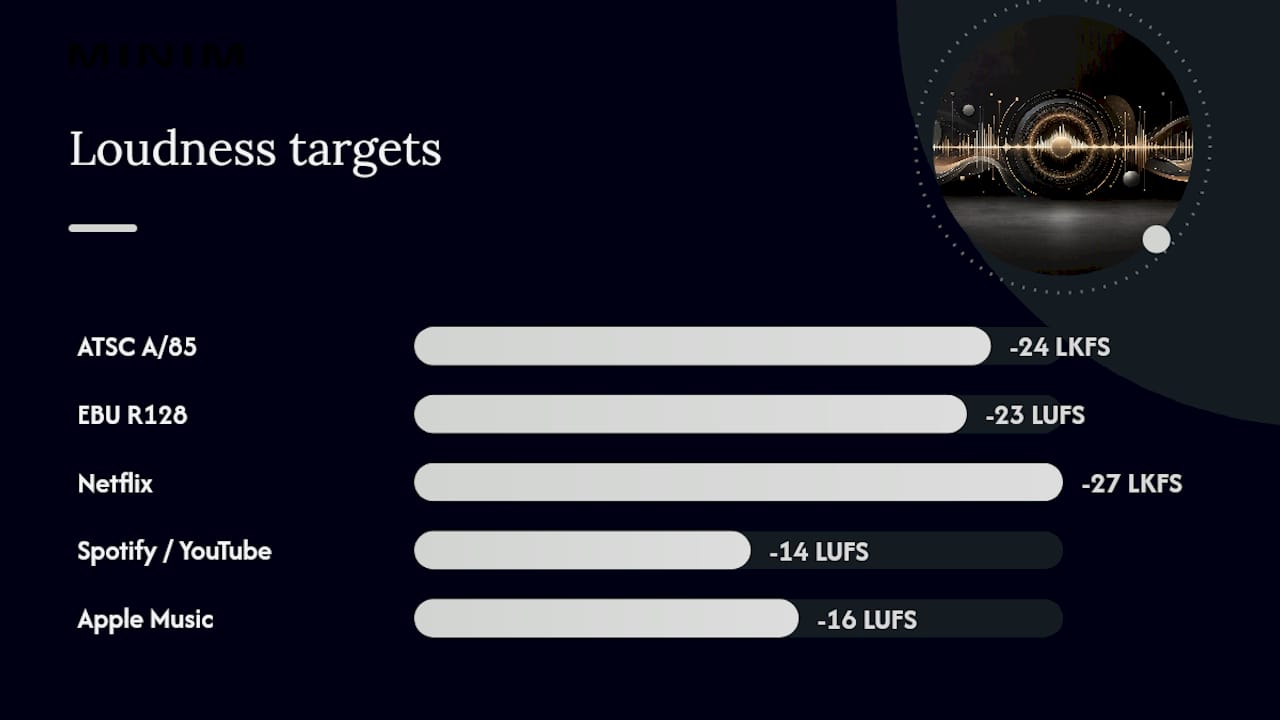
ATSC A/85 governs US television and covers both program content and commercials. It targets −24 LKFS (±2 LU) for content exchange without metadata, with a True Peak ceiling of −2 dBTP. Broadcast AC-3 streams carry a dialnorm metadata value that tells consumer decoders how to normalize playback, and getting that value wrong causes the classic complaint of commercials blasting louder than the show around them. The FCC's CALM Act enforcement page confirms the agency adopted A/85 methods specifically to stop that problem, making compliance a legal requirement for US broadcasters, not just a recommendation.
EBU R128, used across most of Europe and widely adopted elsewhere, targets −23 LUFS with a tighter QC tolerance than its American counterpart and a True Peak limit typically set at −1 dBTP. R128 also formalized Loudness Range (LRA) as a production metric, letting mixers document how much dynamic variation a program carries rather than just its average level. The EBU's Tech Doc 3343 frames loudness normalization as a way to preserve creative dynamics while still leveling out average program loudness across a broadcast day.
ITU-R BS.1770 isn't a delivery target at all. It's the measurement algorithm underneath nearly every meter you use, defining K-weighting, multichannel summing, and the true-peak calculation method that ATSC, EBU, and Netflix specs all reference. The ITU-R BS.1770-5 recommendation is the reason your loudness meter in Pro Tools and a broadcast QC station in another country agree on the same number.
Platform specs layer on top of these. Key targets to keep straight:
- Netflix: −27 LKFS dialog-gated (±2 LU), near-field monitoring at 79 or 82 dB SPL
- Spotify and YouTube: roughly −14 LUFS integrated
- Apple Music: roughly −16 LUFS when Sound Check is active
- US broadcast commercials: −24 LKFS under CALM Act enforcement
LUFS, LKFS, LRA, and True Peak: What Each Meter Reading Tells You
LUFS and LKFS measure the same thing. Both describe perceived loudness using ITU-R BS.1770's K-weighted algorithm, and the terms are functionally interchangeable (LKFS is the term ATSC prefers; LUFS is the EBU and ISO term). Neither has anything to do with the peak level shown on a standard digital meter, which is exactly why a mix can clip a sample-peak meter while still measuring quiet on a loudness meter, or vice versa.
Three loudness readouts matter at different stages:
- Integrated loudness averages the entire program and is the number that determines whether you hit your delivery target.
- Short-term loudness rolls over roughly a 3-second window, useful for checking whether a scene or section drifts from your target mid-mix.
- Momentary loudness reacts almost instantly, showing transient peaks in perceived level that integrated readings smooth over.
Loudness Range (LRA) measures the spread between quiet and loud passages across the whole program, in loudness units. A dialogue-heavy drama might run an LRA of 8 to 12 LU, while a dense action mix compresses tighter. Platforms rarely enforce a hard LRA number, but checking it tells you whether your dynamics will survive a streaming platform's own normalization pass.
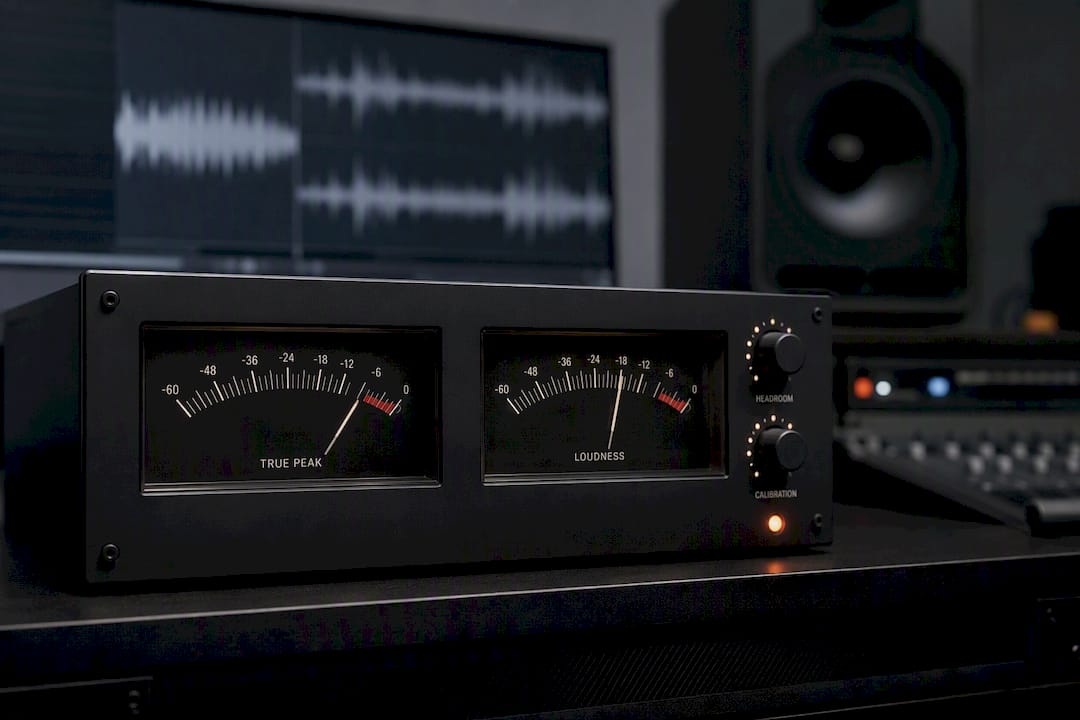
True peak measures the reconstructed analog waveform after digital-to-analog conversion, catching inter-sample peaks that a standard sample-peak meter misses entirely. This matters because codec encoding (AAC, Dolby Digital, DTS) can introduce peak overshoots that a source file's sample-peak meter never flagged, which is exactly what causes post-encode QC failures. The Netflix sound spec recommends limiting true peak to around −2.3 dBFS specifically to survive that encoding pass with margin to spare.
One more distinction matters for gating: dialog-gated measurement excludes silence and non-dialogue passages from the loudness calculation, which is why long-form content measures dialogue against ATSC's own guidance using this method, while short-form spots and promos typically measure full-program loudness since there's no sustained dialogue anchor to gate against.
Setting Up a Monitoring Environment You Can Trust
Your loudness meter can be perfectly calibrated and your mix can still miss the target if your room and playback level are lying to you. A mix built at the wrong SPL sounds "right" in the room and wrong everywhere else.
- Pick one reference SPL and stick to it. Near-field mixing generally calibrates to 79 or 82 dB SPL; theatrical work calibrates to 85 dB SPL. Switching between them session to session without recalibrating is how mixers end up chasing their own ears instead of the meter.
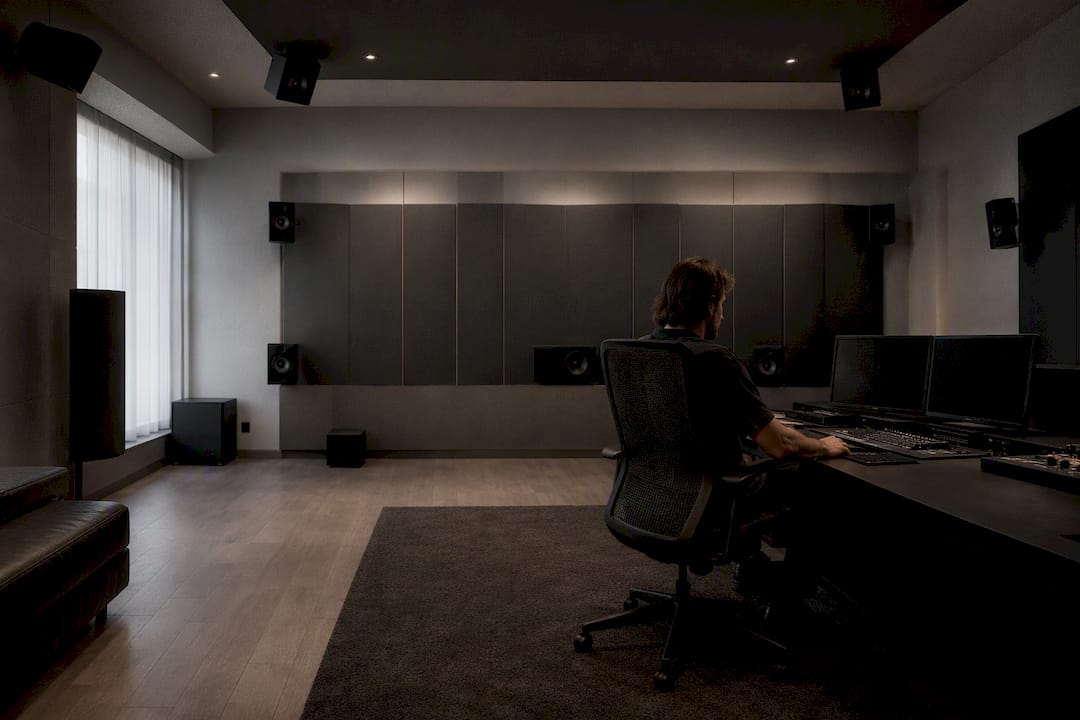
- Calibrate the room, not just the fader. Stereo setups need symmetric speaker placement and basic room treatment at minimum; 5.1 and Atmos near-field configurations (commonly 7.1.4 for home Atmos work) need each channel individually calibrated to the same reference SPL using pink noise and an SPL meter.
- Retrain your ears if you're coming from peak-normalized habits. If you're used to mixing "hot" at −20 LUFS by feel, moving to a −23 LUFS target means raising your monitoring level by roughly 3 dB to preserve the same perceived loudness you're used to hearing, otherwise you'll unconsciously push the mix louder to compensate.
- Check translation on at least two other systems. A laptop speaker and a phone speaker at reduced volume will expose masking and low-end problems that a calibrated studio room won't.
Pro Tip: Recalibrate your monitors monthly with a fixed pink-noise reference, not just when a session sounds off. Ears drift with fatigue and room temperature long before you notice.
Deliverable Requirements Across Broadcast, Streaming, Theatrical, and Immersive Platforms
Each distribution channel has its own file specs, and missing one detail (wrong sample rate, missing dialnorm, unrendered stems) is the most common reason a finished mix bounces back from QC.
Broadcast deliverables need correctly populated dialnorm metadata inside the AC-3 stream and a True Peak ceiling of −2 dBTP going into encoding, matching ATSC A/85's guidance. Encoders don't fix a bad metadata value; they just pass it downstream to the viewer's decoder.
Streaming platforms normalize on playback, which changes how you should approach limiting. If a platform targets −14 LUFS and your master sits at −9 LUFS, the platform's normalization will turn it down, and an aggressively limited mix ends up sounding flat and lifeless once the loudness gets pulled back. Mixing with headroom intact, rather than slamming a limiter to compete on loudness, translates better after normalization.
Theatrical work references 85 dB SPL and cares less about integrated loudness normalization than broadcast or streaming does, but it's stricter about peak handling ahead of the digital cinema package print master. Reels and stems need separate QC passes from the final consolidated file.
Immersive and Atmos deliverables need a minimum 7.1.4 monitoring setup for home Atmos mixing, plus 5.1 and stereo rerenders for platforms that don't support object-based audio. Netflix's home-mix guidance specifically calls for dialog-gated −27 LKFS on these rerenders, and true-peak limiting on beds and objects at roughly −2.3 dBFS avoids summing-induced peak overshoots that only show up after the render.
File format matters more than engineers sometimes admit: deliver 48 kHz / 24-bit WAV, BWAV, or RF64 masters. A lossy master baked in early throws away headroom and introduces artifacts that no amount of downstream QC can recover.
A Step-By-Step Checklist for Hitting Standards Before Delivery
Run this sequence at the end of every mix, not just before final delivery. Catching a peak problem on day one costs five minutes; catching it after the client signs off costs a remix.
- Gain-stage the session first. Peak tracks conservatively (roughly −18 to −6 dBFS headroom on individual channels) before you touch a limiter, so nothing forces you into corrective compression later.
- Set your meter to the correct standard and gating mode. Switch to ITU/EBU mode, enable dialog gating for long-form content, and confirm you're reading integrated LUFS/LKFS, not just short-term.
- Set your limiter ceiling to the platform target, then pull back further. A true-peak ceiling around −2.3 dBFS on Atmos or streaming rerenders builds in margin for encoding-induced overshoot.
- Print stems and rerenders with complete metadata, including dialnorm for broadcast, and log the final integrated LUFS, LRA, and true-peak readings for each deliverable in a written report.
- Encode a test file and re-measure it. Loudness and peak values can shift after AAC or Dolby Digital encoding, so the number you see on your unencoded master isn't the number that reaches the viewer.
Pro Tip: Keep a running spreadsheet of every project's final measurements against its target spec. When a platform's QC system flags something, you'll have the receipt already in hand instead of scrambling to re-measure a locked mix.
How MINIM Approaches QA on Every Deliverable
MINIM's mixing pipeline runs a consistent sequence on every project: session prep and gain staging, a dedicated reference pass against the target platform spec, a loudness-only pass separate from creative mixing decisions, stem printing, metadata tagging, and a final delivery verification step before anything ships.
That verification step is where most last-minute fire drills get prevented. Every deliverable gets test-encoded and re-measured post-encode, not just checked on the unencoded master, and every measurement (integrated LUFS, LRA, true peak) gets logged against the platform target before the file goes out. Atmos projects get a secondary 5.1 rerender check specifically for summing-induced peak issues, following the same post-production workflow MINIM uses across broadcast, streaming, and theatrical deliverables for agency partners.
Why Standards Compliance Protects Creative Intent, Not Just QC Scores
Mixers sometimes treat loudness standards as a constraint on creative dynamics, something to fight against rather than work within. That framing gets it backward. A mix that respects LRA and true-peak headroom actually survives platform normalization better than one slammed to sound loud in isolation, because normalization systems will turn down an overcooked mix and expose every flaw the limiter was hiding.
The engineers who avoid last-minute corrective mastering are the ones who meter loudness from the first pass, not the final one. Waiting until delivery to discover your integrated LUFS is 4 dB off target means remixing under deadline pressure, and that pressure is where creative decisions get sacrificed for speed. Build the measurement habit early, and the standard stops feeling like a constraint and starts feeling like a checkpoint you already passed hours ago.
— Steven Reina
Get Standards-Compliant Mixes Without Adding Headcount
Agencies juggling multiple campaign deliverables rarely have a mix engineer on staff who lives inside ATSC, EBU, and Netflix specs every day, and hiring one for a single project rarely pencils out. MINIM works as an embedded production partner instead, handling mixing, stem printing, and Atmos deliverables alongside full QC against the exact platform spec your campaign needs to clear.

That means every deliverable ships with a documented measurement report showing integrated loudness, LRA, and true-peak readings against the target spec, so your team isn't guessing whether a file will clear a platform's automated QC before it's out the door. Whether you're prepping a broadcast commercial under CALM Act rules or an Atmos rerender for a streaming client, the same QA pipeline applies from first mix pass to final delivery. Explore MINIM's production services to see how a standards-driven mixing workflow fits into your next campaign.
Reference Specs Worth Bookmarking
For regulatory questions, go to the FCC's CALM Act page. For the measurement algorithm itself, reference ITU-R BS.1770-5. For US broadcast targets, use ATSC A/85; for international delivery, use EBU R128. For streaming-specific deliverables, check Netflix's sound mix spec, and for a broader comparative view across platforms, Vector DSP's standards overview is a solid supplementary reference.
Sources
- FCC — Sound Volume of Commercials (CALM Act)
- ITU-R BS.1770-5: Algorithms to measure audio programme loudness and true-peak audio level
- ATSC A/85 — Techniques for Maintaining Audio Loudness (2026)
- Netflix Sound Mix Specifications & Best Practices v1.6
- EBU Tech Doc 3343 — Guidelines for production in accordance with R128