
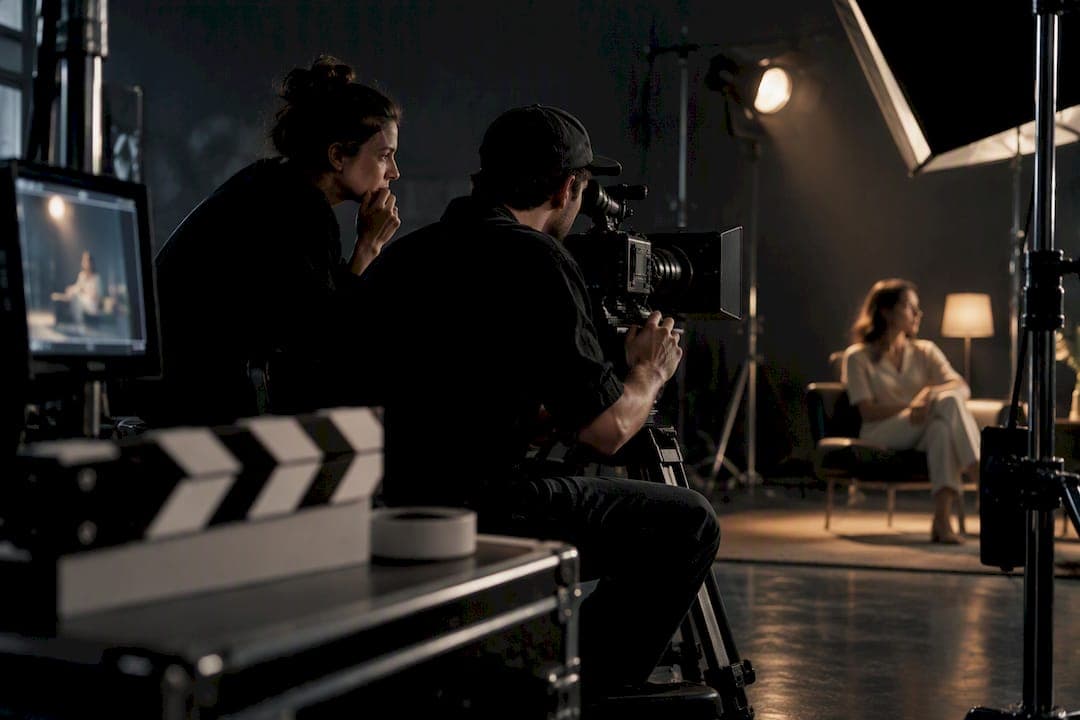
Dynamic video creative is a system of premium, cinematic campaign assets, a hero film plus every cutdown, vertical edit, and motion-graphics variant it spawns, built to scale across channels without losing production quality. Agencies, creative directors, and brand teams commission it when internal capacity can't match campaign demand. The rest of this guide covers briefing, rights, workflow, and how to keep quality intact, at scale.
TL;DR:
- Developing a single hero shot with coverage for alternate angles, line reads, and cutaways allows for constructing up to 47 derivative assets from one shoot.
- Fixed ownership rights require explicit agreement and a "work made for hire" contract, with payment alone not transferring copyright.
- A well-structured brief emphasizes campaign outcomes, audience details, creative tone, channel specs, and clear milestones to ensure quality and legal safety.
- AI tools can accelerate production and ideation processes but must be guided by human judgment to maintain campaign consistency and creativity.
- Continuous feedback between media, creative, and production teams improves campaign performance through rapid A/B testing and surgical asset adjustments.
Table of Contents
- What Counts as Dynamic Video Creative (and What Doesn't)
- Why Cinematic Quality Still Drives Campaign Results
- How to Brief and Contract a Video Production Partner
- Building a Shoot That Scales Into a Full Asset Bank
- Keeping Creative and Media Teams in Sync During Flight
- MINIM's Take on Scaling Cinematic Production
- How MINIM Fits Into Your Next Campaign
- Sources
- FAQ
What Counts as Dynamic Video Creative (and What Doesn't)
Dynamic video creative, in the sense that matters for agency commissioning, is a hero commercial shot once and engineered to produce a full asset bank: cutdowns for social feeds, vertical edits for Stories and Reels, motion-graphics templates for localized versions, and a library of raw and finished files an agency can reuse across a quarter of campaign flights.

This is not the same thing as "dynamic creative optimization," the ad-platform term for feed-driven ads that auto-assemble from product catalogs. That's a media-buying mechanism. This is a production discipline: human-directed, cinematically lit, story-first work engineered from the outset for adaptability.
Agencies reach for a production partner instead of in-house teams or freelance vendors when a campaign needs both cinematic polish and volume. A single internal editor can cut two or three versions of a spot. A structured shoot with atomization built into the plan can generate 30 to 47 derivative pieces from one day on set.
Why Cinematic Quality Still Drives Campaign Results
Creative quality is not a finishing touch. Nielsen and NCSolutions' meta-analysis of advertising effectiveness found that for campaigns running outside an advertiser's core buyer target, creative can be the dominant driver of sales, outweighing media placement itself. Media gets the ad in front of someone; the creative decides whether that person cares.
Most companies still build video in-house, but Wyzowl's research shows a meaningful share now lean on outside production, and AI adoption inside those workflows is climbing fast. Neither trend replaces the need for premium execution. It raises the bar for what "in-house capable" actually means.
There's a compounding operational payoff, too. A well-atomized shoot gives an agency a reusable asset bank for the whole campaign arc, which means faster turnarounds on the next brief and tighter brand consistency across every channel variant, instead of a patchwork of one-off edits commissioned separately each time.
How to Brief and Contract a Video Production Partner
A weak brief is the single most common reason cinematic campaigns come back flat, over budget, or legally exposed. Build the brief around the outcome, not just the shot list.
A workable brief covers:
- The business objective and the specific audience segment, not a generic "brand awareness" line
- The core creative idea in one sentence, plus tone references
- KPIs tied to the campaign, whether that's completion rate, recall, or conversion
- Channel specs: aspect ratios, safe zones, caption requirements, max run times
- A delivery schedule with milestone reviews, not just a final due date
- Acceptance criteria, meaning exactly what "done" looks like before final payment
Contracts need equal precision. Under U.S. copyright law, a commissioned video only becomes a "work made for hire" the agency automatically owns if it fits a narrow statutory category and both parties sign a written agreement saying so explicitly. Payment alone does not transfer ownership. The Copyright Office's own guidance is blunt about this: assume nothing, put it in writing.
Pro Tip: If any influencer or spokesperson appears in a deliverable, build FTC disclosure language into the contract now. The FTC's endorsement guides call for disclosures that are visual and audible, not buried in a caption, and repeated if the video runs long.
Building a Shoot That Scales Into a Full Asset Bank
Cinematic quality at volume starts long before the camera rolls. Preproduction has to plan for atomization from day one, meaning the shotlist captures alternate angles, alternate line reads, and cutaway coverage specifically so editors can build derivative assets later without a reshoot.
A workflow that holds up under real campaign timelines looks like this:
- Lock a shotlist that maps every scene to its intended derivative uses, hero cut, 15 second cutdown, vertical crop, before the shoot day.
- Shoot for coverage flexibility: wider frames that crop cleanly to vertical, alternate takes for regional or seasonal swaps.
- Build post around reusable modules, LUTs, motion-graphics templates, caption styles, so future versions don't start from zero.
- Standardize file naming and metadata so masters, cutdowns, and verticals route cleanly into an agency's asset management system.
- Deliver a structured asset bank, not a folder dump, so media teams can self-serve the right file fast.
This is also where AI tools genuinely help, as demonstrated in automated demo video workflows like those featured on TrailerCast's AI Demo Trailers. Adweek's coverage of R/GA's Google Veo project shows AI accelerating ideation and select production tasks, but human direction still carries the taste, continuity, and judgment calls that keep a campaign from feeling generic. Treat AI as a production accelerant inside a human-led process, not a replacement for one.
Keeping Creative and Media Teams in Sync During Flight
Dynamic video creative earns its name when it keeps evolving after launch, not just before it. Advertising Week's coverage of media-buyer strategy makes the case plainly: campaigns that build continuous feedback loops between production, creative, and media outperform ones that wait for an end-of-campaign report to learn anything.
A functional integration setup includes:
- A weekly (or faster, for high-spend campaigns) sync between the media team and the production partner
- Rapid A/B tests on specific cuts, not full creative overhauls, to isolate what's actually moving the number
- Attention and retention metrics used as the trigger for a short-turn recut, not just gut instinct
- Clear tagging on every asset variant so a test result maps back to the exact edit that produced it
The goal is surgical adjustment: swap a hook, tighten a cutdown, retag an audience segment, without touching the campaign's creative spine.
MINIM's Take on Scaling Cinematic Production
Agencies are quietly rewriting how they price and staff creative work. As Advertising Week has reported, the shift away from hours-based billing toward output and ROI models is pushing agencies to lean harder on partners who can produce at volume without the agency adding permanent headcount. That's the exact gap MINIM was built to fill.

MINIM operates as a strategic production partner that plugs directly into an agency's creative team, from concept through final delivery, rather than working as a detached vendor waiting for a spec sheet. The portfolio on the MINIM work page shows what that integration produces in practice: cinematic campaigns built with atomization in mind from the first shoot day, not bolted on afterward.
What agencies consistently underestimate is how much of "quality at scale" is actually a planning problem, not a budget problem. A partner who understands creative strategy and production as one continuous discipline, not two separate handoffs, is the difference between an asset bank that holds up for a full quarter and a pile of orphaned cutdowns nobody can find in month two.
— Steven Reina
How MINIM Fits Into Your Next Campaign
Some production partners exist for the pressure agencies feel right now: campaigns that need cinematic execution at a volume no internal team can absorb without adding permanent staff. Instead of a detached vendor relationship, a good partner integrates directly with your creative team, handling everything from creative strategy and screenwriting through full production, art direction, and visual effects, so the work still feels like yours.
A typical starting engagement with a production partner may be scoped around a single campaign: one hero shoot, a defined asset bank, and clear governance on review rounds and delivery milestones, enabling evaluation of the partnership on a contained project before committing to a longer arc. Projects may run as full productions regardless of budget size.
If your next brief needs more cinematic output than your current bench can deliver, look through the MINIM services breakdown and request a scoping call to map your campaign against a realistic production plan.
Sources
- FTC's endorsement guides: What people are asking
- Copyright Office circular: Copyright basics and works made for hire
- Nielsen/NCSolutions: How advertising works — Five keys report
- Wyzowl — Video marketing statistics
FAQ
What Makes Video Creative "Dynamic" in This Context?
It means a hero cinematic asset built with adaptability planned in from the shoot day, not a single fixed cut. A production partner captures coverage that supports dozens of platform-specific versions, cutdowns, verticals, localized edits, without a reshoot.
Does an Agency Own the Video It Commissions?
Only if the contract explicitly states the work is a "work made for hire" and both parties sign it, per Copyright Office guidance. Paying for production alone does not automatically transfer ownership.
How Many Assets Can One Shoot Realistically Produce?
A shoot planned around atomization from the start can yield 30 to 47 derivative pieces, covering hero cuts, cutdowns, vertical crops, and motion-graphics variants, from a single production day.
What Does It Cost to Hire a Production Partner Like MINIM?
MINIM's services, including creative strategy, full production, and visual effects, don't carry published rates; pricing is scoped per campaign and available on request through the MINIM services page.
How Long Does a Dynamic Video Creative Project Take?
Timelines depend on shoot complexity and asset volume, but a structured brief with clear acceptance criteria and milestone reviews keeps a campaign from stalling in revision loops. Building the delivery schedule into the contract upfront, rather than negotiating it mid-project, is what keeps timelines realistic.