
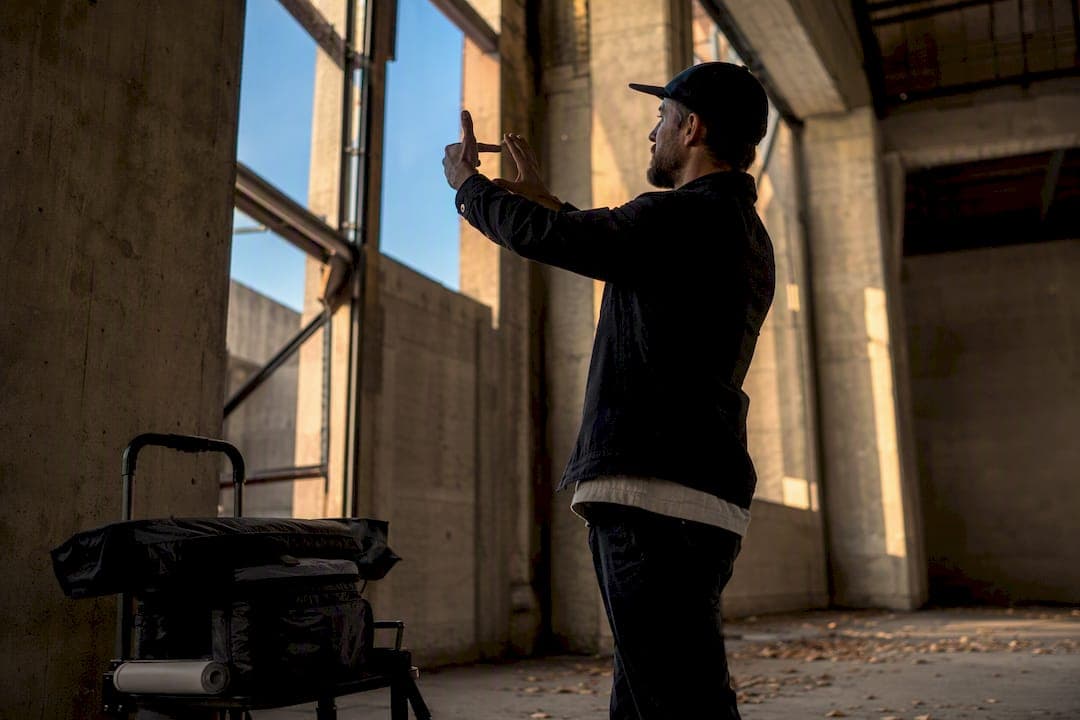
For commercial shoots, run a two-stage scout: a director scout to lock the creative look, then a tech scout to make it executable. Verify visual fit, sound, and access on the first pass, not the second. Commercial timelines don't leave room for a location to fail during prep, so the scout has to do real work, not just produce nice photos for a deck.
Three things to check immediately, no matter how good a location looks on paper:
- Visual fit against the treatment. Does the space actually match the frames the director sold the client?
- Sound audit. HVAC hum, street traffic, flight paths, and neighboring construction schedules.
- Access, parking, and permits. Can trucks stage nearby, and does the jurisdiction require a permit for what you're planning?
Sun position deserves its own line item. Mapping cardinal orientation with an app like SunSeeker during the director scout tells you whether your 2 p.m. call time actually gets the light the treatment promises, and permit costs for major markets often run $300 to $600 per day, so pricing that in early keeps the budget honest.
Key Takeaways
The two-stage scout, run with a shot-by-shot checklist and early film-office contact, is what separates a commercial that shoots on schedule from one that doesn't.
| Point | Details |
|---|---|
| Run two distinct scouts | Director scout locks creative fit; tech scout confirms execution with full department heads present. |
| Audit sound early | HVAC, traffic, and scheduled noise sources can force a costly ADR fallback if missed. |
| Model hidden fees | Site-rep charges, overtime, and closures can turn a low day rate into your most expensive option. |
| Set a real tech-scout deadline | Leave at least three business days of runway to fix or replace a failed location. |
| Bring MINIM in for execution | MINIM integrates location scouting into full campaign delivery, reducing handoff risk between departments. |
Table of Contents
- Two-Stage Scouting: Roles, Goals, and Timing
- Practical Location Scout Checklist: Sight, Sound, Power, and Safety
- Scheduling, Permits, and Budgeting Location Fees
- Tools, Apps, and Kit to Bring on a Scout
- Choosing the Final Location Under Time or Budget Pressure
- Tech-Scout Walkthrough: Confirmations, Power Maps, and Deliverables
- Common Risks and How to Catch Them Early
- MINIM's Approach to Scouting and On-Set Risk
- Local Regulations and Community Impact
- Environmental Factors Beyond the Sun
- Coordinating With Production Design and Logistics
- Budget Implications of Different Locations
- Contingency Planning for Location Changes
- What Most Scouting Advice Gets Wrong
- Get Location Scouting Handled Inside a Full Production Team
- Sources
Two-Stage Scouting: Roles, Goals, and Timing
The director scout and the tech scout solve different problems, and conflating them is how productions end up rebuilding a schedule two days before the shoot.
The director scout is a creative filter. It's small on purpose: director, DP, producer, and locations manager, walking a shortlist to confirm a space actually delivers the mood and framing the treatment describes. Nobody is measuring breaker panels yet. The goal is a yes/no on visual fit, fast, so the team isn't dragging six department heads through locations that get cut in round one.
The tech scout is where execution gets tested. This trip needs the full crew: gaffer, key grip, production designer, sound mixer, and the AD, all confirming the location can physically support the shoot as designed. This is when the treatment meets breaker capacity, ceiling height, and load-in reality.
Timing matters more than most schedules admit. A two-stage workflow works only if the tech scout happens with enough runway before the shoot for departments to react to what they find. Ideally that's a week or more ahead of first shoot day, never the day before.
- Lock the location off the director scout.
- Schedule the tech scout immediately, before prep timelines get consumed by other tasks.
- Set a hard tech-scout deadline that still leaves time to source alternate power, book a generator, or pivot the shot list if something doesn't work.
Pro Tip: If the tech scout reveals a dealbreaker, you want at least three business days of runway left, not zero, to either fix it or find a backup location.
Practical Location Scout Checklist: Sight, Sound, Power, and Safety
A good checklist does the thinking so nobody has to remember it under pressure on the day. Walk the space with the shot list in hand and check off every setup, not just the hero shots.
Sight and shot alignment
- Walk each planned shot against the treatment and shot list, standing where the camera will actually sit.
- Note ceiling height, window placement, and any structural elements that will show up in wide frames.
- Flag anything that reads differently in person than it did in scout photos.
Sound
Sound gets treated as an afterthought more often than any other item on this list, and it shouldn't. A detailed checklist built for production audits treats sound as roughly half the battle on any dialogue-driven spot. Listen for HVAC cycling on and off, run the water if there's plumbing nearby, and check what's audible from the street. If the neighborhood has scheduled leaf-blowing or trash pickup, get that on the calendar. Some jurisdictions require a separate noise variance for anything past a certain decibel threshold, and that paperwork takes time.
Power and cable runs
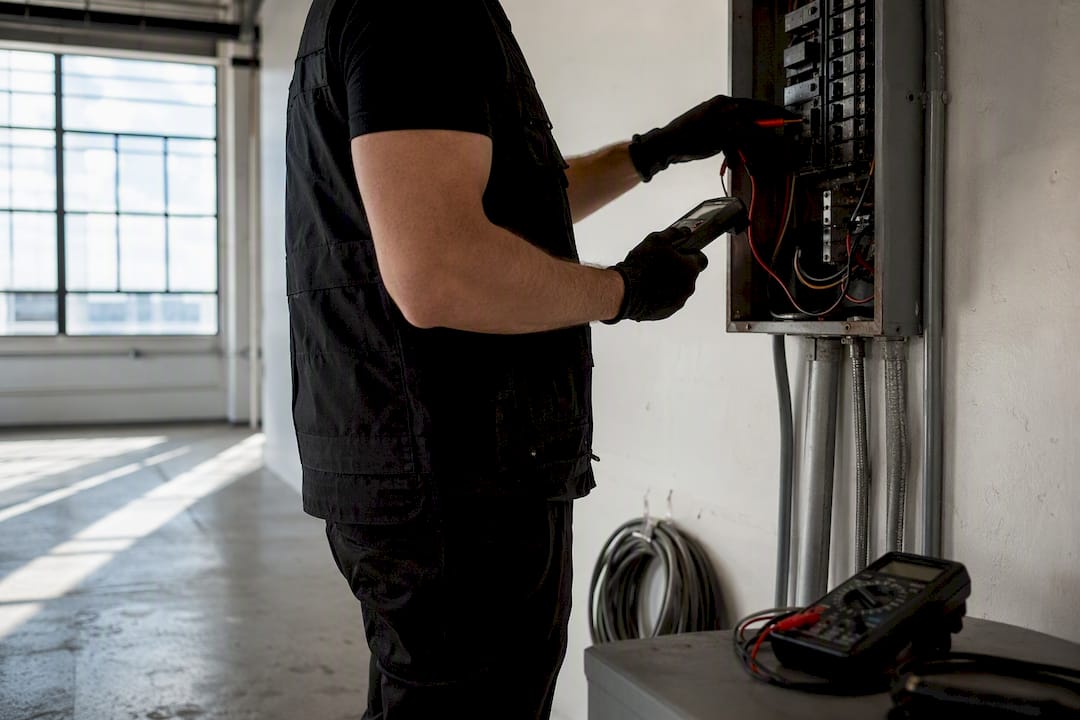
Find the breaker panel and confirm actual amperage, not what the property manager assumes it is. Map where a generator can stage without blocking access, and plan cable runs that don't cross walkways or become a trip hazard for talent.
Parking, staging, and access
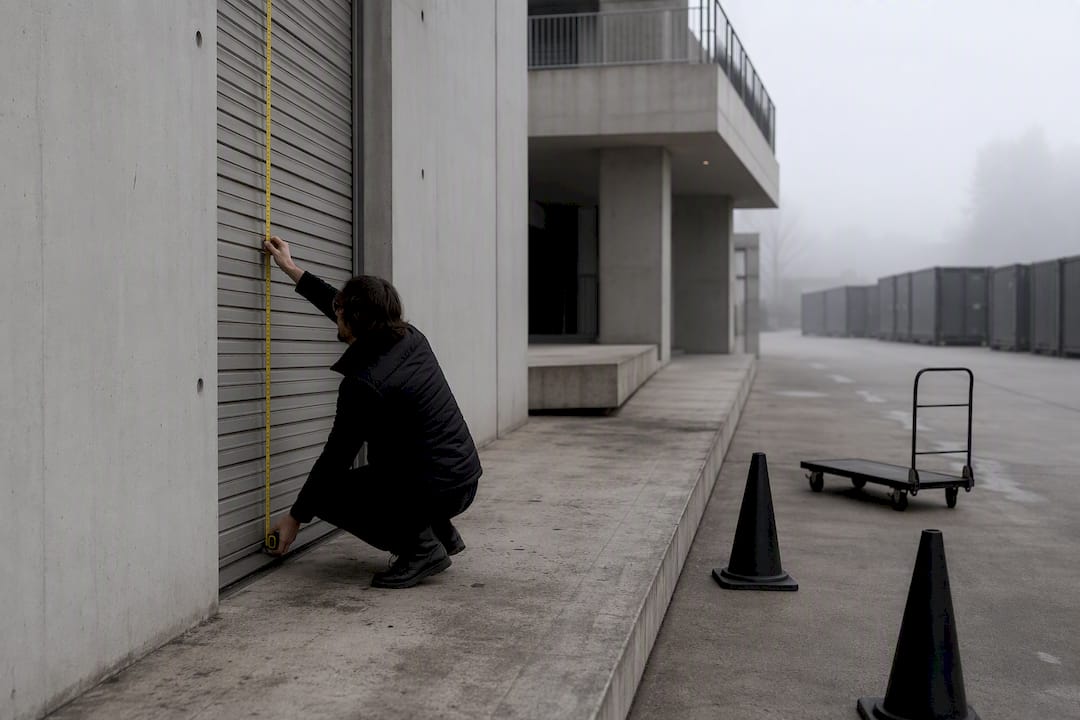
Confirm truck staging, a base camp location, and whether nearby street parking requires a permit. Note load-in paths: stairs, elevators, doorway widths, and anything that will slow down a truck full of gear at 6 a.m.
Safety
Fire exits, lifeguard requirements for pool locations, and any site-rep rules the property enforces all belong on this list before day one, not discovered on set.
- Photograph every checkpoint with a timestamp.
- Note anything requiring a change order or extra rental gear.
- Flag items needing a follow-up call to the location owner.
Pro Tip: Do a full shot-by-shot mental rehearsal on the scout using the actual shot list, not just the treatment. It surfaces obscure needs, like a missing outlet near a hero prop position, before a department wastes a day planning around a problem that doesn't exist.
Scheduling, Permits, and Budgeting Location Fees
Call the film office as early in pre-production as you can, before the location is even locked. Many offices offer free consultations and maintain pre-cleared location libraries, and some waive fees for smaller productions, which can meaningfully change your shortlist.
Permit timelines and fees vary sharply by market. Major cities often charge $300 to $600 per day with three to ten business days of processing; mid-size cities run lower, and state or national parks can require two to four weeks of lead time plus an additional location fee. Residential rentals on lower-budget productions typically land between $500 and $2,500 per day depending on market and property type.
| Market type | Typical permit fee | Typical processing time |
|---|---|---|
| Major city | $300 to $600/day | 3 to 10 business days |
| Mid-size city | $150 to $350/day | Varies by office |
| Small city | $50 to $200/day | Faster, often under a week |
| State/national park | Additional location fee | 2 to 4 weeks |
Insurance is non-negotiable in almost every case. Most property owners and film offices require a certificate naming them as additionally insured, with minimums commonly set well into six figures per occurrence, and you'll want that language finalized before the tech scout, not the morning of the shoot.
Hidden costs are where budgets actually break. Site-rep fees, overtime charges, parking, police or fire details for street closures, and noise variances rarely show up in the initial day rate quote. University locations spell this out clearly. Campus filming agreements, for example, often bundle a liaison fee with specific overtime rules and tech-scout timing requirements, which is a useful template for what to ask any location owner up front.
Pro Tip: Build a simple line-item cost model per location, not just a day rate. A $150 hidden site-rep fee plus a four-hour overtime block can turn your cheapest option into your most expensive one.
Tools, Apps, and Kit to Bring on a Scout
The right kit on a scout saves you a second trip. Bring a reference lens or a phone app that approximates your primary lens's field of view so photos actually mean something back at the office. Load an iPad or tablet with the treatment and shot list so you can hold it up against the actual space in real time.
- SunSeeker for mapping cardinal orientation and predicting where the sun sits at your planned call time.
- Annotated photo tools for marking up frames directly on-site instead of relying on memory later.
- Aerial recon, cleared in advance with the property or local authority, for confirming rooftop access or surrounding context a ground-level scout can't show. Clear Focus Imaging handles aerial photography and video for exactly this kind of pre-visualization work.
- Location marketplaces, like Scouty, for sourcing vetted spaces and scouts-for-hire when the timeline is too tight for a from-scratch search.
Pro Tip: Clear drone recon with the property and local jurisdiction before the scout, not during it. Airspace rules and property permissions can take longer to sort out than the flight itself.
Choosing the Final Location Under Time or Budget Pressure
Commercial timelines rarely allow for endless deliberation, so a simple scoring matrix beats an open-ended debate every time.
- Creative fit. Does it match the treatment without requiring a compromise the client will notice?
- Technical feasibility. Power, access, and space for the full crew and rig.
- Cost and permits. Day rate plus every hidden fee, weighed against the schedule.
- Logistics and risk. Parking, weather exposure, backup options if something falls through.
Weight creative fit and technical feasibility heaviest for commercial work. A location with slightly harder logistics but a stronger visual match to the treatment usually beats a technically easier space that looks generic on screen, since the client is buying an image first.
- Negotiate prep and wrap access into the agreement, not as an afterthought.
- Ask for prep nights if lighting setup takes longer than a single call day allows.
- Push for included site-rep hours instead of paying hourly once you're on the clock.
- Cap overtime rates in writing before signing.
Negotiating explicit pre-light access up front often costs little or nothing extra, but it can save a full crew call's worth of time on shoot day.
Tech-Scout Walkthrough: Confirmations, Power Maps, and Deliverables
The tech scout only counts if it produces documents the crew can actually use on shoot day. Walking the space and nodding isn't enough.
Each department needs to confirm something specific. The gaffer checks breaker locations and amperage against the lighting plan. The key grip confirms rigging points and any weight limits on ceilings or trusses. The production designer verifies floor plans against set dressing needs. Wardrobe scopes out a holding space. Sound confirms noise sources identified on the director scout are still manageable, or worse than expected.
Building a power and cable map during the tech scout, not after, means the electrical department can walk the actual runs, mark breaker capacity, and flag anything that needs a generator or distro cart before it becomes a shoot-day surprise.
| Deliverable | Purpose |
|---|---|
| Annotated floor plan | Marks camera positions, lighting setups, and rigging points |
| Power and cable map | Shows breaker locations, amperage, and planned cable runs |
| Vehicle and staging map | Assigns truck parking, base camp, and load-in paths |
| Signature approvals | Confirms location owner sign-off on final terms |
| Schedule constraints | Documents access windows, noise curfews, and overtime limits |
- Issue every deliverable within 24 to 48 hours of the tech scout while details are fresh.
- Circulate the power map to the electrical and grip departments specifically, not just the general call sheet.
- Confirm signature approvals in writing before the location is considered locked.
Common Risks and How to Catch Them Early
The most expensive location mistakes are the quiet ones nobody flags until shoot day.
Sun trajectory mismatches top the list. A location that looked perfect at a 10 a.m. director scout can shift entirely by a 3 p.m. call time. Running SunSeeker against your actual shoot-day schedule, not just the scout time, catches this before it costs you a reshoot.
Ambient sound traps are the second biggest offender. A quiet street during a weekday morning scout can turn into a construction zone by the following week. Build in a noise-variance contingency or budget for ADR if the location has any history of unpredictable sound.
- Skipping or rushing the tech scout is one of the fastest ways to blow a production day; missed power confirmations alone can add hours of delay on set.
- Read rental agreements for overtime clauses before signing, not after a crew runs long.
- Reconfirm noise and access windows the week of the shoot, since neighborhood conditions change.
Pro Tip: If a location owner won't put overtime rates in writing before the shoot, treat that as a red flag on the whole agreement, not just the fee.
MINIM's Approach to Scouting and On-Set Risk
MINIM operates as an integrated production partner for agencies, which means scouting isn't a separate vendor relationship bolted onto a shoot. It's built into the same team running creative strategy, art direction, and final delivery, so the handoff between director scout and tech scout happens inside one accountable process instead of across disconnected contractors.
- MINIM's production model folds location scouting into the broader campaign execution process, from concept through delivery.
- Founder Steven Reina has written extensively on production workflow and on-set risk reduction for commercial shoots.
- Case studies demonstrating MINIM's location-driven commercial work are available in the company's portfolio.
The gap between a location that photographs well in a scout deck and one that actually holds up on shoot day is where most commercial budgets get blown. Treating the tech scout as a formality instead of a checkpoint is the single most avoidable mistake in commercial production.
Local Regulations and Community Impact
Every jurisdiction treats commercial filming differently, and assuming your last shoot's rules still apply is a common way to get shut down mid-day. Some cities cap the number of consecutive filming days at a residential address. Others require advance notice to neighbors within a certain radius, especially for anything involving street closures, generators running overnight, or elevated noise.
Community pushback is rarely about the production itself. It's about disruption: blocked driveways, early call times waking up a block, or trucks idling for hours. A location that's technically permitted can still generate complaints that shorten your access window or trigger a fine if you don't manage it proactively.
Build in a buffer for neighbor notifications as part of your permit timeline, not as an afterthought once the permit is approved. Some film offices require proof of notification before they'll issue final paperwork, particularly in residential zones. Where a production disrupts pedestrian traffic or parking availability at scale, expect city liaisons or police details to become a mandatory line item rather than an optional one.
Respecting local rules also protects your relationship with a market long-term. Film offices remember productions that left a mess or generated complaints, and it affects future permit approvals, sometimes for years afterward. Treating a location, and the people who live around it, as a resource worth protecting isn't just good ethics. It's what keeps that market open to your next shoot.
Environmental Factors Beyond the Sun
Sun position gets most of the attention on a location scout, but weather and ambient noise cause just as many shoot-day disasters.
Check historical weather patterns for your shoot window, not just the current forecast. A location that's ideal in dry conditions can become unworkable if a seasonal rain pattern turns a parking lot into standing water, or if wind off open water makes audio unusable for an outdoor dialogue scene. Coastal and desert locations both carry seasonal risk profiles worth researching before you lock a date.
Noise isn't limited to what you hear during the scout hour. Ask about recurring events: nearby school schedules, weekly trash pickup, construction permits filed for adjacent lots, or flight paths that shift by time of day. A location quiet at 9 a.m. on a Tuesday might sit under a flight corridor that gets busy at 2 p.m.
Temperature and humidity matter for both crew safety and equipment performance. Extended outdoor calls in extreme heat require shade structures and hydration planning that should get budgeted, not improvised. Humidity affects lens fogging and can slow down certain camera gear in ways that eat into your shooting window.
Document these factors the same way you document sight lines and power. A location that fails on weather risk or unpredictable noise deserves the same scrutiny as one that fails a technical checklist. It's rarely a single factor that kills a location. It's usually two or three compounding issues that only look obvious in hindsight.
Coordinating With Production Design and Logistics
Location scouting doesn't happen in a vacuum, and treating it as a locations-department task alone creates problems that surface later in prep. Production design needs to walk the space early enough to plan set dressing, paint touch ups, or structural additions around what the location can actually support. A wall that can't hold weight, or a floor that can't be modified, changes the design plan entirely.
Logistics teams need the same early access. Truck routing, base camp placement, and crew parking all depend on the physical realities of the location, and those decisions ripple into call sheet timing. A location with a great look but no viable truck route can add hours to a load-in that eats directly into your shooting day.
Share tech-scout deliverables with production design and logistics the moment they're finalized, not once shooting starts. A pre-production checklist that ties location confirmations directly to design and logistics milestones keeps departments from working off outdated assumptions. The earlier design and logistics see the actual space, not just photos, the fewer surprises show up on shoot day.
Budget Implications of Different Locations
The day rate is never the real cost of a location, and treating it that way is how budgets fall apart mid-production. A cheap residential rental with no on-site parking can end up costing more once you add remote base camp shuttle logistics, extra crew hours for equipment carry, and a parking permit for every truck on the block.
Higher-end commercial locations, studios, or well-managed properties often come with built-in infrastructure, like adequate power and easy load-in, that reduces line items elsewhere in the budget. A slightly higher day rate can net out cheaper once you account for generator rental, extra grip trucks, or additional crew hours a harder location would require.
Market type drives a lot of this. Major-city permits and site-rep fees run higher than smaller markets, but major cities often have more infrastructure and pre-cleared locations that reduce prep time. A rural location might have a lower day rate but require additional insurance, generator rental, and travel costs for crew that erase the savings.
Model every location option against its full cost, not its headline rate, before presenting choices to a client. That comparison, done honestly, is often what convinces a client to pay more for a location that actually works instead of chasing the cheapest number on a spreadsheet.
Contingency Planning for Location Changes
Locations fall through. A property owner backs out, a permit gets denied, or a tech scout reveals a dealbreaker with no time to negotiate around it. Building a contingency plan isn't pessimism. It's what keeps a single lost location from becoming a lost shoot day.
Keep a ranked backup list from your director scout, not just a single winner. If your top choice falls through during permitting, having a second and third option already vetted at the creative level saves you from starting the search over from zero with no runway left.
Build slack into your tech-scout deadline specifically so a failed confirmation still leaves room to pivot. If the deadline sits three days before shoot day instead of the night before, a blown power confirmation becomes a solvable problem instead of a crisis.
Keep contracts flexible where possible. Some location owners will agree to a short hold period before full commitment, which lets you keep a backup live while finalizing your primary choice. Document every contingency decision and its cost implication so the client understands tradeoffs if a switch becomes necessary partway through prep.
What Most Scouting Advice Gets Wrong
Most guidance on location scouting treats it as a real estate exercise: find a pretty space, check the box, move on. That framing misses where commercials actually lose money and time. The risk isn't finding a location. It's the gap between what looks right on a director scout and what actually holds up once gaffer, grip, and sound show up with real equipment and a real schedule.
The conventional advice to "scout early" is true but incomplete. Early scouting only helps if the tech scout gets the same seriousness as the creative pick, with a hard deadline that leaves room to react. Productions that treat the tech scout as a formality, a walkthrough to confirm what everyone already assumed, are the ones that discover a breaker panel problem on shoot morning.
If there's one thing worth prioritizing above the rest, it's building slack into the tech-scout timeline. Every other risk on this list, from sun mismatches to sound traps to permit surprises, is recoverable if you catch it with a few days to spare. None of them are recoverable at 6 a.m. on shoot day.
— Steven Reina
Get Location Scouting Handled Inside a Full Production Team
Coordinating a two-stage scout, chasing film office paperwork, and managing five department confirmations takes real production infrastructure, not just a good checklist. MINIM gives agencies that infrastructure without adding permanent headcount: a team that scouts, permits, and executes commercial shoots as part of one integrated production process, from creative strategy through final delivery.

That matters most when a campaign timeline is tight and there's no room for a location to fail mid-prep. Instead of coordinating a locations manager, a separate crew, and a production company as three disconnected vendors, agencies working with MINIM get scouting folded directly into the same team handling art direction, shot lists, and final cut. Fewer handoffs mean fewer places for a tech-scout detail to slip through the cracks.
If your next commercial needs a production partner who treats location scouting as part of execution, not a separate problem to manage, explore MINIM's services and start a conversation about your next campaign.
Sources
- How to Budget Location Costs for an Indie Film: Permits, Rentals, and Hidden Fees | Tools for Film
- The Ultimate Location Scout Checklist for Producers and ADs — StudioBinder
- How to scout locations like a commercial photographer — Jake Dyson Field Notes
- Campus Filming fees — USC