
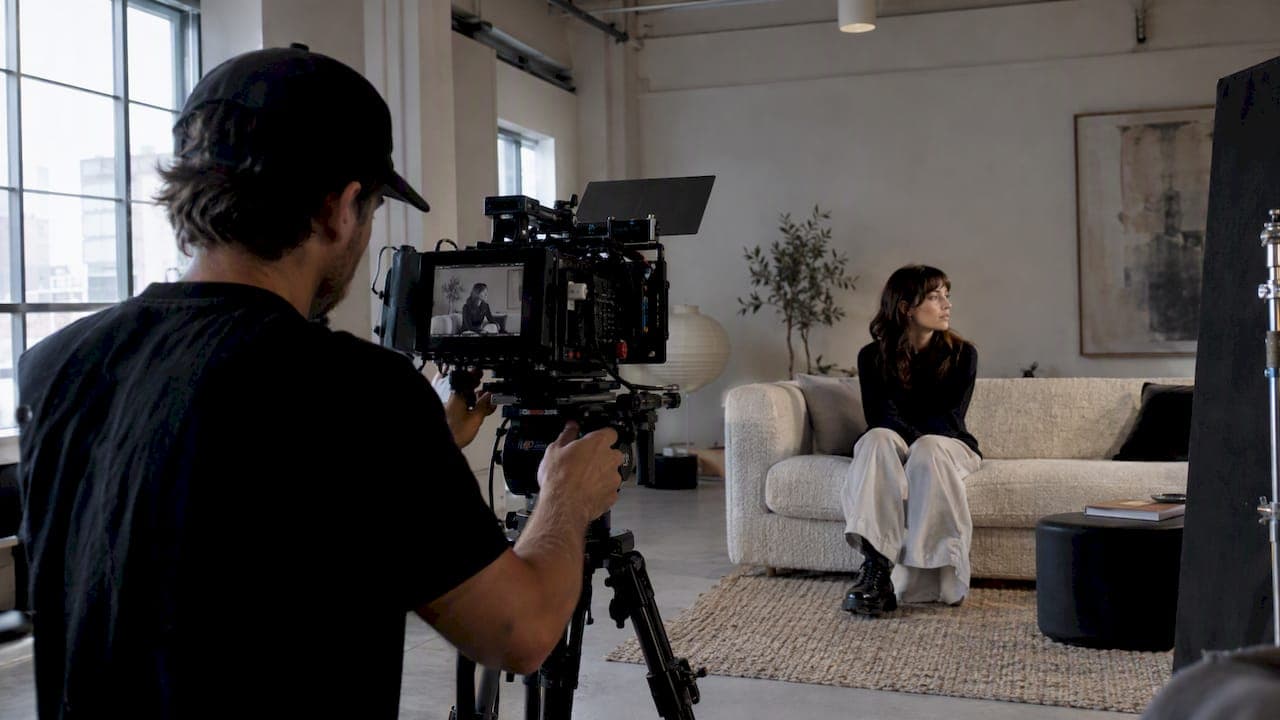
A cinematic ad is not about expensive gear. It comes down to five intentional choices: lighting that sculpts mood, lens and format for depth, composition and movement that carry emotion, color grading that protects brand identity, and sound that adds scale. With sharp prep and a focused hero shoot, these choices produce cinematic results inside a typical agency budget.
TL;DR:
- On tight budgets, protect the poster shot and lighting brief first; secondary angles and other production choices can flex without compromising the central frame.
- Choose the master aspect ratio around platform targets, and leave safe areas for vertical, square, and horizontal crops to prevent key content from being cut.
- Request grading notes, raw masters, project files, and sound stems upfront; use the approved hero still as a reference to keep edits consistent.
- Choose licensed music when budgets or deadlines are tight; commission an original score for a distinctive brand moment, and request stems for later edits.
- For variants, capture faces and signature moments in a hero shoot, then create versions with motion graphics or AI tools and check color and framing.
Table of Contents
- Copyable production checklist and poster-shot template
- Practical lighting setups and color strategy for cinematic ads
- Choosing cameras, lenses, and aspect ratio for cinematic texture
- How framing, blocking, and camera moves tell cinematic stories
- Briefing production design and wardrobe for cinematic tone
- Music, Foley, and sound design choices that lift the spot
- Editing and grading workflow for consistent cinematic results
- Scaling cinematic output with a split production workflow
- A brief commissioning template and timeline for cinematic ads
- A lesson learned from prepping cinematic ad shoots
- MINIM: a production partner for delivering cinematic ads
- FAQ
- Sources
Copyable production checklist and poster-shot template
Before anyone touches a camera, lock these items in order:
- Define the creative intent in one sentence.
- Design the poster shot, the single frame that captures the spot's emotional core.
- Choose the camera package and lens set.
- Write the lighting brief, including mood references.
- Finalize wardrobe and props against brand color chips.
- Brief sound and music direction.
- Confirm post deliverables and platform specs.
Paste this poster-shot template into any call sheet or creative brief:
- Visual intent: one sentence describing the feeling, not the action.
- Lens choice: focal length and depth-of-field target.
- Lighting note: key source, direction, and contrast level.
- Coverage: two supporting angles that protect the poster shot.
- Deliverables: master format plus required crops.
On a tight budget, protect the poster shot and lighting brief first. Everything else can flex.
Practical lighting setups and color strategy for cinematic ads
Cinematographer Claudio Miranda advises keeping lighting "as real as possible", motivating every source so staged light still reads as something that could exist in the room. That principle shapes most cinematic ad lighting:
- Build from a motivated source, then shape it with soft boxes, flags, and bounce.
- Decide early whether the story calls for deep shadow or a flatter, high-key look.
- Reference hero stills during the grade so the final color matches what the director approved on set.
- Request color deliverables explicitly: input device transforms, LUTs, and written grading notes, not just a finished file.
Our studio lighting setups for commercial producers page walks through configurations that translate well to brand work.
Pro Tip: Photograph your lighting setup on set and attach it to the post brief so the colorist can match contrast decisions instead of guessing at them.

Choosing cameras, lenses, and aspect ratio for cinematic texture
Depth of field is a story decision before it is a technical one. A shallow depth of field isolates a product or face and reads as intimate; deep focus suits spots that need the environment to carry meaning. Vintage anamorphic glass, as DP Phedon Papamichael has described, adds distortion, bokeh character, and flare that spherical lenses rarely produce.
- Match frame rate and shutter angle to the motion feel you want, from crisp to slightly dreamlike.
- Pick an aspect ratio with platform delivery in mind, then shoot wide enough to protect safe areas for crops.
- Plan master format first: vertical, square, and horizontal crops all need room inside the original frame.
A quick primer on aspect ratio choices and their effect on viewers is worth a read before you lock format.
How framing, blocking, and camera moves tell cinematic stories
- Design the poster shot first, then build every other angle to support it rather than compete with it.
- Choose controlled moves (dolly, slider, gimbal) for polish and stability, and handheld only when the story calls for urgency or rawness.
- Block actors against foreground elements so the frame has visible depth instead of a flat background.
- Shoot two to three angles per scene that give editors real options without padding the schedule.
Our guide to storyboards for commercial production helps teams lock these decisions before the shoot day starts.
Briefing production design and wardrobe for cinematic tone
Production design should support the story without burying the product. Choose textures and colors that grade well and sit comfortably next to brand color rather than fighting it.
- Pick a palette that complements the brand's color chips under the planned lighting style.
- Use props and wardrobe to suggest character and scale, never to pull focus from the product.
- Walk the set before each take to catch logo conflicts or continuity breaks.
- Include wardrobe swatches and paint chips in the brief so every department works from the same reference.
Music, Foley, and sound design choices that lift the spot
Sound carries as much weight as the image. Pick music with instrumentation and an emotional arc that mirrors a film cue, not a generic stock loop.
- License a track when budget and timeline are tight; commission an original score when the brand moment needs a unique signature.
- Layer in Foley and sound design, footsteps, fabric, ambient texture, to sell realism in a short spot.
- Request stems and platform-length versions so edits can adjust without remixing from scratch.
Editing and grading workflow for consistent cinematic results
Grade against a reference still rather than a one-click LUT. Reference-driven grading matches the hero frame the director approved and keeps brand color consistent across every crop.
- Cut for the rhythm of the format: a 15-second spot needs tighter pacing than a 60-second brand film.
- Export a full checklist: master file, mezzanine, social crops, loudness levels, and bitrate per platform.
- Review on a calibrated monitor before final sign-off.
Platform specs matter more than they seem. Amazon's Sponsored Brands video guidelines detail autoplay behavior at 50% onscreen and logo placement rules, meaning a grade that looks right in a master file can still fail if the crop ignores platform requirements.
Scaling cinematic output with a split production workflow
Agencies increasingly run a split workflow: a hero shoot captures key faces and signature brand moments, while AI-driven tools and motion graphics generate the supporting variants. Industry commentary on commercial filmmaking describes marketers loading several creative variants per week using this split approach without re-shooting the hero footage.
- Set naming conventions and version control before the first variant ships.
- Define handoff specs so hero footage and generated assets match color and framing.
- Build QA gates that catch mismatches before anything goes to platform.
A hero shoot protects the frame the brand is built on. Everything scaled around it should look like it came from the same set, not a different production.
We work directly inside agency creative teams to deliver both the hero assets and the scaled variants from one coordinated workflow, detailed further in our piece on piloting AI video production without adding headcount.
A brief commissioning template and timeline for cinematic ads
- State creative intent and attach the poster-shot reference.
- List technical specs: camera, aspect ratio, frame rate, and deliverable formats.
- Confirm platform targets and required crops.
- Set budget and timeline, including prep, shoot, post, approval, and a fallback date.
- Ask partners directly about usage rights, reshoot policy, and revision caps before signing.
Request a complete handoff package upfront: raw masters, project files, grading notes, and stems, so nothing stalls at delivery.
Pro Tip: Build one buffer day into post for color revisions. It costs far less than a reshoot caused by a rushed first grade.

A lesson learned from prepping cinematic ad shoots
The shoots that fall apart are almost always the ones where nobody locked the poster shot before call time. On one production, a last-minute client note upended the lighting plan an hour before the first setup, and the only thing that saved the day was a grading reference everyone had already agreed on. Lock your reference frame before you need it.
— Steven Reina
MINIM: a production partner for delivering cinematic ads
We act as a production partner for agency creative teams, handling creative strategy, full production, grading, and 2D/3D visual effects so cinematic campaigns can be delivered efficiently.
From the hero shoot through scaled variants, we manage color consistency and brand-safe grading across every deliverable, keeping the poster shot's intent intact from concept to final file. See how this plays out across completed campaigns on our work page, or review the full list of services on our skills page to find the right starting point for your next production.
FAQ
What is a cinematic look in advertising?
A cinematic look is the result of intentional choices in lighting, lens, composition, color, and sound that support a story's emotional core, as cinematographers describe it. It is a narrative approach, not a specific camera or budget tier.
What is the 60-30-10 rule in filmmaking?
A frame can remain visually organized while still supporting brand recognition.
How do you make a cinematic ad?
Start with a single poster shot that captures the emotional intent, then build lighting, lens choice, composition, color grading, and sound design around protecting that frame. Reference-driven grading and motivated lighting, rather than generic filters, are what separate a polished spot from a cinematic one.
What makes a successful cinematic advertising campaign?
Successful cinematic campaigns pair a strong hero shoot with disciplined post production, consistent brand color across every platform crop, and sound design that matches the pacing of the story. A tight commissioning brief that defines the poster shot and deliverables upfront reduces revisions and keeps the final product aligned with creative intent.
Sources
- Sponsored Brands video - Ad specs and guidelines | Amazon Ads
- Commercial filmmaking and AI workflows | Filmmakers Academy
- A Non-Technical Approach To Achieving The Cinematic Look | Noam Kroll
- Forging the cinematic language of speed with Top Gun: Maverick DP Claudio Miranda | Film Independent