
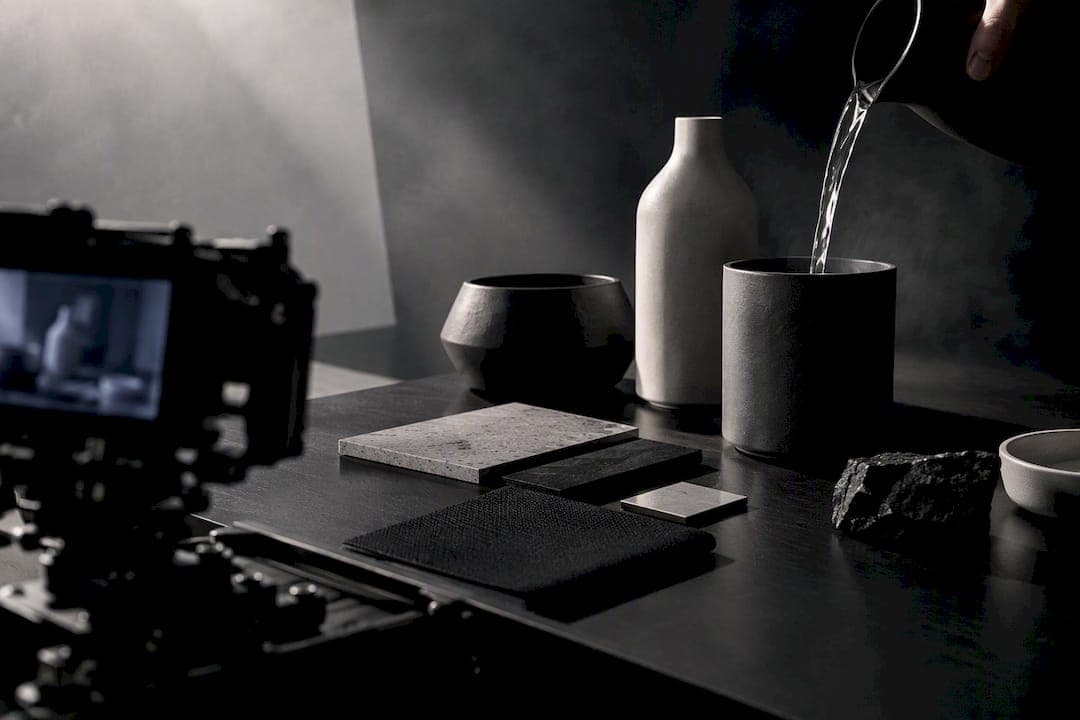
Tabletop commercials are close-up studio spots shot on a flat surface under controlled lighting to sell a product through texture, function, and craft. They lean on macro cinematography and motion-control rigs to make a pour, a crumb, or a hinge look worth wanting. Agencies reach for them for hero product shots, social-first teasers, and TV cutdowns, and a partner like MINIM typically builds them on a repeatable studio process rather than a one-off shoot.
TL;DR:
- Precise lighting choices are essential to highlight texture and function, with soft sources for matte surfaces and specular control for shiny packaging.
- Thorough preproduction, including storyboarding, animatics, and rehearsals with stand-in props, reduces on-set surprises and ensures practical effects are timed accurately.
- Macro lenses demand narrow apertures to maintain depth of field, and real-time focus peaking along with false color monitoring help prevent focus and exposure errors during shoots.
- A typical tabletop setup requires controllable LED lighting, motion-control rails, non-reflective surfaces, and basic rigging to achieve consistent, broadcast-quality results efficiently.
- Post-production primarily involves rig removal, background cleanup, color grading, and aspect-ratio adaptation, with planning ahead saving time and costs across multiple formats.
Table of Contents
- What Are Tabletop Commercials and What Do They Achieve?
- Lighting, Composition, and Motion: The Non-Negotiables
- How Do You Plan a Tabletop Shoot Before Cameras Roll?
- What Camera and Lens Choices Keep Tabletop Shots Sharp?
- What Gear Does a Tabletop Studio Setup Actually Need?
- What Happens in Post for a Tabletop Commercial?
- How Do You Evaluate a Director's Tabletop Reel?
- How Does an Agency Production Partner Run a Tabletop Project?
- What One Directing Lesson Actually Changes a Tabletop Shoot?
- Get a Production Partner for Your Next Tabletop Campaign
- Sources
- FAQ
What Are Tabletop Commercials and What Do They Achieve?
A tabletop commercial happens on a controlled, flat-surface set built for one purpose: getting the camera close enough to a product that its texture, mechanism, or ingredients become the story. No location scout, no weather risk, just a table, a backdrop, and lighting built around the object.
Most tabletop briefs chase one of a few goals:
- Show texture or ingredients up close (a chocolate bar snapping, condensation on a can)
- Demonstrate function (a zipper closing, a hinge folding, a cap twisting off)
- Create appetite or luxury cues through light, color, and rhythm
Platform matters here too. A vertical social cutdown often needs a tighter, faster reveal than a 30-second TV hero spot, and smart teams shoot with both in mind from the first storyboard.
Lighting, Composition, and Motion: The Non-Negotiables
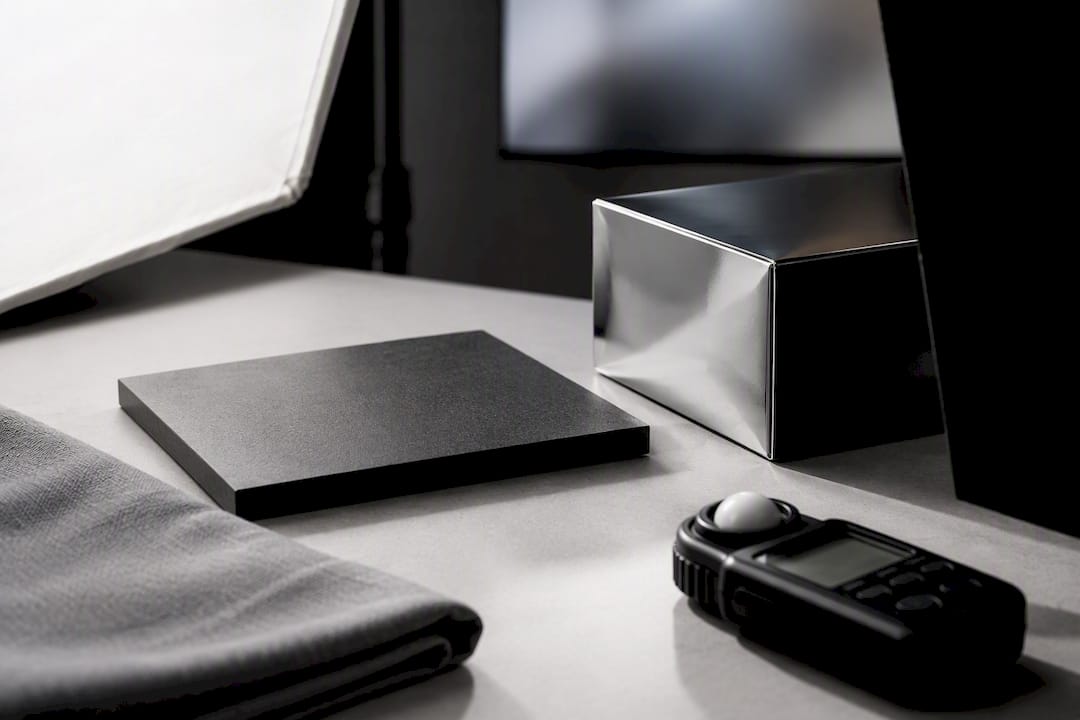
Lighting is the single biggest lever on a tabletop set. Get it wrong and texture disappears; get it right and a simple pour looks like premium footage. Lighting choices for close-up and macro work shift depending on the subject: matte surfaces need broad, soft sources to avoid flat shadows, while reflective packaging needs specular control through diffusion panels and careful flagging to kill hot spots.
Composition does the rest of the persuading. A top-down reveal, a slow hero arc around the product, or a macro push into a single detail each tells a different story, and the choice should match what the brief actually needs to prove.
Motion adds the final layer. Practical effects (splashes, cracks, pours) paired with high-speed capture and motion-control rigs give you repeatable camera moves you can match across multiple takes without reinventing the shot each time.
Pro Tip: Test your lighting setup on a stand-in prop before the real product arrives. Food styling and packaging change under hot lights fast, and you don't want to discover that on the client's dime.
How Do You Plan a Tabletop Shoot Before Cameras Roll?
Preproduction is where tabletop commercials either come together or fall apart on set. The fix is a tight, repeatable process:
- Build the storyboard around a 15, 30, or 60 second arc template, mapping each beat (setup, reveal, payoff) to a specific frame.
- Turn the storyboard into an animatic to test timing on high-speed or practical-effect beats before anyone books gear.
- Write a shot list that locks camera paths, lens choices, and lighting cues to each storyboard frame.
- Rehearse practical effects with stand-in props to nail timing before the real product is on set.
- Prep contingency plates, backup props, and food-styling swaps in case a take goes sideways.
Directors who favor practical, in-camera solutions over heavy VFX tend to lean hardest on this rehearsal step, since a well-timed practical effect on camera beats a fix in post almost every time.
What Camera and Lens Choices Keep Tabletop Shots Sharp?
Macro lenses are the backbone of tight tabletop work, but they come with a tradeoff: the closer you get, the shallower your depth of field, so aperture choice becomes a creative decision, not just an exposure one. A wider aperture isolates a single detail in focus; a narrower one holds more of the product sharp but demands more light.
High-speed capture earns its place on splashes, pours, and drops. Standard frame rates work fine for slower reveals or static beauty shots where nothing needs slowing down.
Monitoring is what keeps a tight macro shot from drifting out of focus between takes:
- Focus peaking highlights in-focus edges in real time, which matters enormously when your depth of field is measured in millimeters
- False color shows exposure values across the frame, catching blown highlights on shiny packaging before they ruin a take
- Off-camera monitors let the director and DP judge framing from an angle the camera operator can't see
Focus peaking and false color matter most on practical-effect sequences, where a missed focus pull on the one usable take means reshooting the whole rig setup.
What Gear Does a Tabletop Studio Setup Actually Need?
A working tabletop studio doesn't need a warehouse of gear, but it needs the right pieces in the right places:
- LED panels and small Fresnels for controllable, consistent color temperature. CRI (color rendering index) matters more than raw output here, since a low-CRI light will make food look gray no matter how bright it is.
- Motion-control rails for camera moves you need to repeat exactly across multiple takes or product variants.
- Non-reflective tabletop surfaces and backgrounds to avoid fighting reflections during setup, which saves hours of relighting later.
- DIY rigging options (clamps, articulating arms, sandbags) for lower-budget shoots that still need precise, repeatable positioning.
Practical rigging and lighting tricks can get a small crew broadcast-quality results without renting a full studio's worth of fixtures. For a deeper breakdown of fixture choices and why color temperature consistency matters across a set, studio lighting setups for commercials is worth a read before you build your gear list.
What Happens in Post for a Tabletop Commercial?
Post-production on a tabletop spot is where the rig disappears and the product takes over. Typical steps include:
- Wire and rig removal, since motion-control mounts and practical-effect triggers almost always show up in raw footage
- Plate replacement for background cleanup or fixing a flawed frame with a clean plate shot earlier
- Color grading tuned to enhance texture and appetite cues, not just correct exposure
- Aspect-ratio matching so the same hero footage cuts cleanly for TV, YouTube, and vertical social formats
Editors commonly reach for compositing tools like Nuke to handle rig cleanup before grading. Planning aspect-ratio variants during preproduction, rather than reshooting for each platform, saves real budget, and aspect-ratio strategy for viewers is a useful primer on how framing choices change viewer perception across formats. For the mechanics of the pipeline itself, a post-production workflow guide covers the studio side in more depth.
How Do You Evaluate a Director's Tabletop Reel?
Reading a reel well means looking past the polish. Watch for how lighting handles texture, whether the rhythm of cuts matches the product's story, and whether effects are practical or built entirely in post.
A few things worth checking before you commit to a director or DP:
- Does the reel show behind-the-scenes footage or just finished cuts? Directors publishing BTS content makes it far easier to judge real technique versus editing tricks.
- Ask directly what was shot practically versus fixed in post. A director's answer here tells you a lot about their process discipline.
- Look for laboratory-precision food films where timing and lighting do the heavy lifting rather than heavy VFX layering.
How Does an Agency Production Partner Run a Tabletop Project?
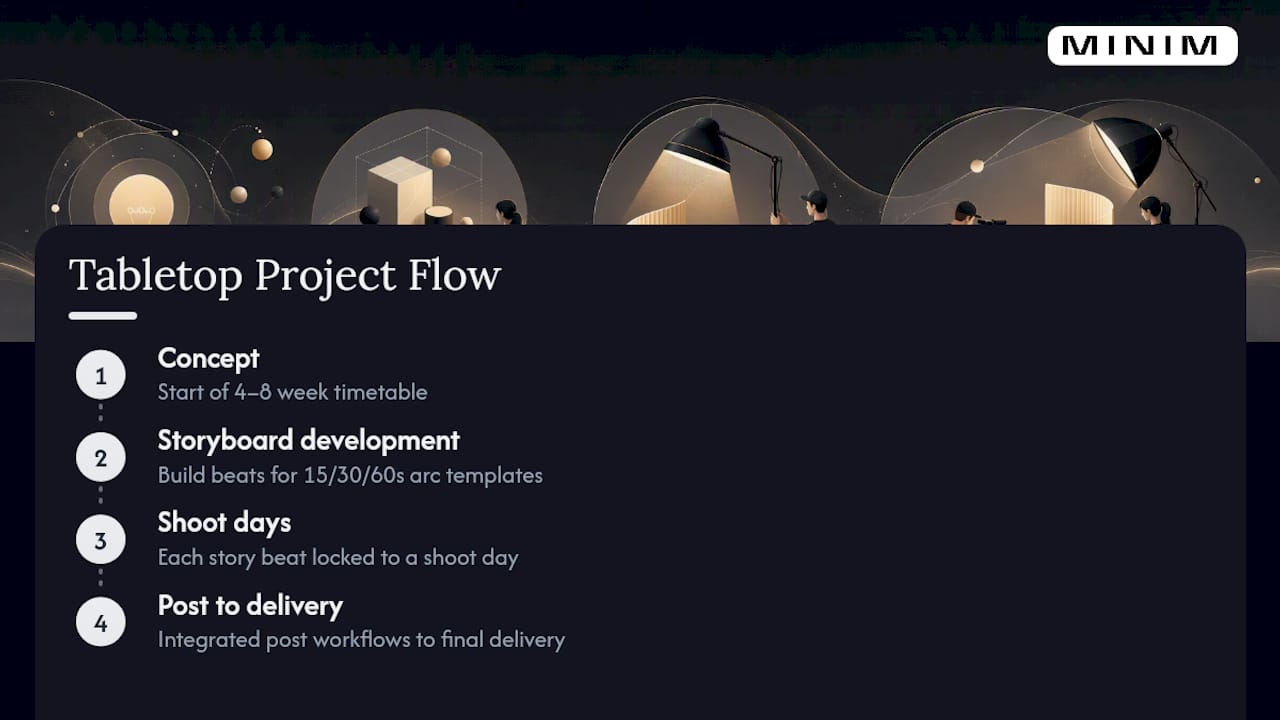
MINIM typically structures tabletop commercial work inside a 4 to 8 week production timetable, moving from concept through storyboard development into shoot days mapped to 15, 30, and 60 second arc templates. Each story beat is locked to a shoot day before cameras roll. For agencies, that structure means fewer surprises, less internal production load, and post workflows that stay integrated from the first storyboard to final delivery.
What One Directing Lesson Actually Changes a Tabletop Shoot?
The lesson that sticks: rehearse the practical effect until it's boring, because the take that looks effortless on screen usually took a dozen dry runs to get there. Collaborating well with agency creative teams means protecting that rehearsal time even when the schedule gets tight.
— Steven Reina
Get a Production Partner for Your Next Tabletop Campaign
MINIM works as an integrated production partner for agencies that need cinematic tabletop commercials without building an in-house studio team from scratch. The storyboard-to-shoot-to-post workflow covered above, arc templates, motion-control rigs, rehearsed practical effects, and clean post delivery, is exactly how MINIM structures its own Full Service Production and Photography & Film engagements.
Instead of scaling headcount for one campaign, agencies bring MINIM in on a project basis and get a team that already runs this playbook end to end, from Creative Strategy through final delivery. If you want to see how finished tabletop work looks in practice, browse the work and case studies, then reach out to request a project brief or set up a discovery call to scope your next shoot.
Sources
For lighting fundamentals on close-up and macro work, Henrys Blog's guide breaks down setups by subject type. For food filmmaking craft and practical-effects philosophy, Karl Fenton's approach at Irresistible Studios is worth studying. For monitoring tools on tight macro sets, Adorama's focus peaking explainer covers the essentials, and Atomos's food cinema piece shows why BTS transparency helps clients brief better.
- How to shoot food videos: pro tips for food commercials | Manfrotto
- Focus peaking explained and why it matters | Adorama ALC
FAQ
What Are the Three Main Types of Commercials?
Commercials generally break into brand spots (building image and emotional connection), product/direct-response spots (driving a specific action or sale), and demonstration spots that show how a product works or feels. Tabletop commercials most often serve the demonstration category, though a well-shot hero product spot can carry brand-level polish too.
What Makes a Tabletop Commercial Different From a Regular Product Ad?
A tabletop commercial is shot in a controlled studio on a flat surface, built specifically for macro detail and repeatable camera moves. A standard product ad might include lifestyle footage, locations, or actors, while tabletop work stays tightly focused on the object itself.
What Are Some of the Best-Known Approaches to Tabletop Commercials?
The strongest tabletop work tends to combine deliberate lighting, practical in-camera effects, and motion-control precision rather than leaning on heavy visual effects. Directors like Karl Fenton have built reputations on this laboratory-precision approach to food and product filmmaking.
Do Tabletop Commercials Work for Social Media as Well as TV?
Yes, and platform planning matters from the storyboard stage. A vertical social cutdown usually needs a faster, tighter reveal than a 30-second TV spot, so many productions plan multiple aspect ratios and edits from a single shoot rather than reshooting for each platform.
How Long Does It Take to Produce a Tabletop Commercial?
A full tabletop commercial, from concept through final delivery, commonly runs on a 4 to 8 week production timetable when working with an experienced production partner. Timing depends on the number of practical effects, revisions, and platform deliverables required.