
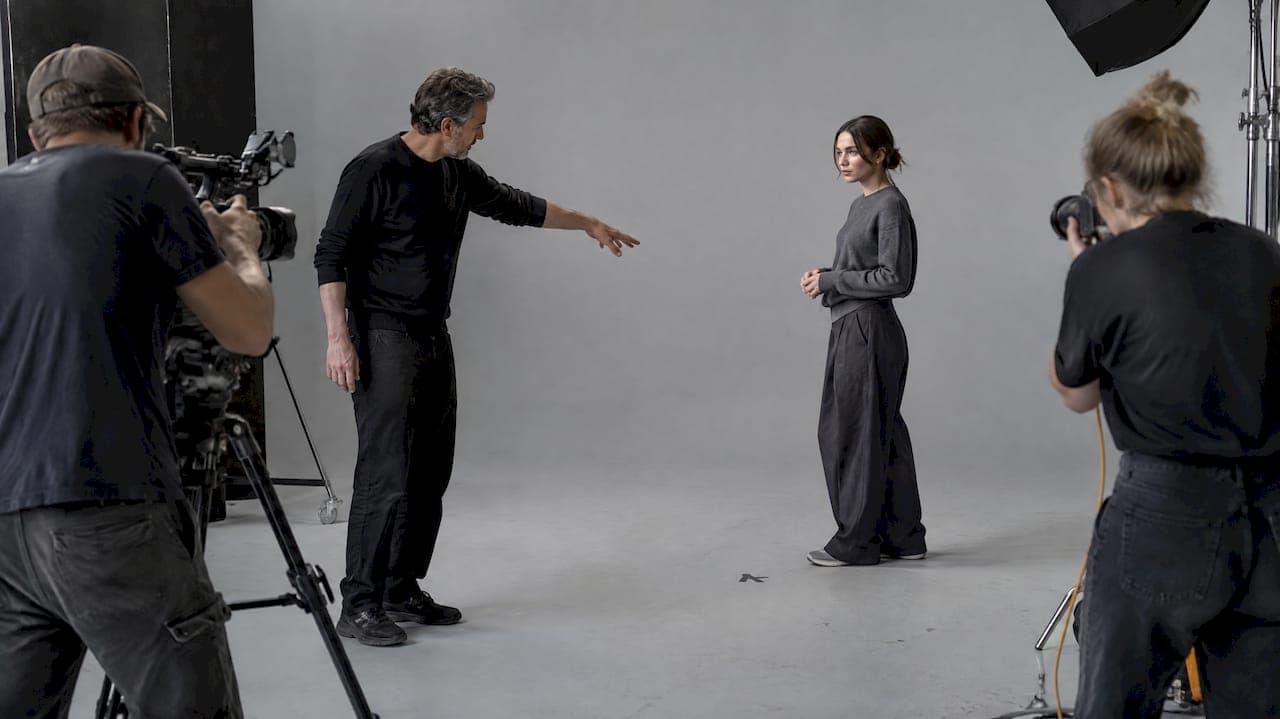
A stills and motion campaign is one integrated production: name the hero asset first and set a capture hierarchy before preproduction begins. That single decision tells the crew whether lighting and composition serve the poster frame or the moving image. Paired with a pre-light day and a written kill order, it gives you a cohesive look across formats and a real chance to save a production day.
TL;DR:
- Build the shot list around lighting setups, reserve stills time within every setup, and distribute a 20% buffer across the day.
- Schedule a preproduction test day when lighting, power, or movement constraints exist, then test monitors and capture workflows before shoot morning.
- Combine formats when setups overlap and the cast is manageable; book separate days for large casts, heavy visual effects, or demanding print resolution.
- Set the master reference still early, agree delivery specifications and file names before production, and route all review notes through one channel.
- Confirm that talent, location, music, and stock licenses cover both stills and motion, including planned placements, territories, durations, cutdowns, and derivative crops.
Table of Contents
- What to look for in stills and motion campaign examples
- How is a campaign different from a single photoshoot?
- Your pre-production checklist for an integrated shoot
- On-set coordination: call sheets, capture windows, and communication
- Post-production rules that keep stills and motion looking like one campaign
- Should you combine shoots or book separate days?
- How do you measure whether a stills and motion campaign worked?
- What trends are shaping stills and motion campaign production?
- How should creative, production, and post work together?
- What legal and licensing issues apply to stills and motion content?
- Why we treat stills and motion as one workflow
- Bring MINIM into your integrated stills and motion campaign
- FAQ
What to look for in stills and motion campaign examples
When you study a portfolio piece, look past the finished polish and read the production decisions underneath it. Strong integrated campaigns rarely look accidental, and the clues are easy to spot once you know them.
- Shared framing: the key still and the opening frame of the video feel like siblings.
- Repeated props and wardrobe: continuity items appear across stills and clips.
- Matched lighting direction: shadows fall the same way in both formats.
- A consistent grade: skin tones and color casts hold from frame to frame.
Typical deliverables include a hero poster shot, print assets, cutdowns of different lengths, and loopable clips for social. Before you borrow an example in a brief, ask which format was the hero, whether the stills would survive print resolution, and whether the lighting stays consistent across clips and frames. Those answers become your briefing language.
How is a campaign different from a single photoshoot?
A photoshoot produces standalone still outputs. A campaign plans cross-format deliverables from the start, so every setup is judged by what it must deliver in more than one medium. That shift changes decisions on set. The capture hierarchy determines who gets the best light, how talent is blocked, and how fast the crew moves between setups.

A briefing that asks for "both stills and video" without naming a priority tends to produce mediocre results on both. Naming the hero asset removes that ambiguity.
A campaign is typically defined by:
- A hero still with a clear composition priority
- Print-ready files cropped for known placements
- Multiple video lengths cut from the same setups
- Social loops or cutdowns derived from the same footage
Your pre-production checklist for an integrated shoot
The biggest risk in a combined shoot is schedule misalignment, so treat pre-production as the place where you win the day. A published behind-the-scenes case study from Fstoppers documents an integrated fashion shoot captured in one day, built on pre-light planning, shared lighting choices, a tethered stills workflow, and a coordinated crew. Use this sequence as your own starting point.
- Name the hero asset for each scene and list the secondary captures.
- Build the shot list grouped by lighting setup, and treat it as a technical instrument rather than a wish list.
- Write stills capture time into each setup so the photographer is never improvising a window.
- Decide the kill order now, in writing, so priorities are settled before anyone is tired.
- Add a time buffer of 20% distributed across setups, not tacked on at the end of the day.
- Schedule a pre-light or test day when lighting, power, or movement constraints exist.
- Confirm the crew: stills photographer, digital tech running tether, DP, director, and a movement operator where needed.
- Test wireless monitors and the capture pipeline during pre-light, not on shoot morning.
Pro Tip: Run your hardest lighting setup first on the pre-light day. If a stills strobe and a continuous motion source fight each other, you want to learn it while the clock is cheap.
Our team goes deeper on lighting choices in three studio lighting setups for commercials, which pairs well with this checklist.
On-set coordination: call sheets, capture windows, and communication
The call sheet is your control document. It should carry more than times and addresses.
- Capture hierarchy per scene: every department sees which asset leads.
- Stills capture windows: written next to the video setups, never assumed.
- Wardrobe and makeup timing: touch-ups scheduled around the windows.
- Review windows: set moments when clients or stakeholders look at selects.
Schedule stills windows during video blocking so you never interrupt a camera move halfway through. Announce each window clearly, then stick to it. With a digital tech and wireless monitors, clients can flag selects without creating downtime, and the tether keeps approvals moving while the next setup is lit.
When the day runs late, the kill order does the arguing for you. A list agreed in pre-production prevents on-set negotiation and protects the essential assets.
Pro Tip: Read the kill order aloud at the morning briefing. Once everyone has heard it, cutting a secondary setup late in the day feels like following a plan, not losing an argument.
Post-production rules that keep stills and motion looking like one campaign
Post has to be integrated from the start. The core rule is to establish a master reference still early, then match the video grade to it so the whole campaign reads as one look. Our guide to color grading for commercials covers the grading side in detail, and our post-production workflow guide covers the pipeline.
- Agree delivery specs up front: print resolution needs, crop-safe stills, aspect ratios, and lengths for each motion deliverable.
- Lock naming conventions: one scheme for stills and clips makes handoff predictable.
- Use a single review place: consolidated feedback cuts rework and speeds final approval.
- Match to the master still: every new grade gets checked against the reference before it goes out.
Post also needs realistic time. Posthive's article on post team time estimates is a useful operational reference when you set client expectations for the schedule.
Should you combine shoots or book separate days?
Combining can save the cost of an extra production day when the hero asset is clearly defined and the setups are compatible. It is not free, though. You will likely extend talent time and add a dedicated stills photographer and digital tech to the film crew, and those costs belong in day rates and call times from the beginning.
- Combine when: setups are compatible, the hero asset is named, and the cast is manageable.
- Separate when: the cast is large, VFX is heavy, or ultra high-resolution print deliverables need dedicated technical setups.
- Always price in: extra talent hours, added crew, and the stills tech.
If efficiency is the goal, our post on getting many assets from one shoot shows how planning upstream multiplies what a single day can yield.
How do you measure whether a stills and motion campaign worked?
Start by tying each asset to a job before the shoot, not after launch. If the hero still is meant to anchor print and out-of-home placements while the cutdowns drive social engagement, judge each against its own purpose. A poster frame and a short clip should not be graded on the same scorecard.
Useful signals fall into a few buckets:
- Attention: view-through on video cutdowns and click-through on the still-led placements.
- Consistency: whether audiences recognize the campaign across formats, which you can probe with brand-recall surveys.
- Efficiency: assets delivered per shoot day and rework rounds in post.
- Downstream action: site visits, sign-ups, or sales tied to specific placements through tagged links.
Compare formats against each other as well. If the loop outperforms the still in the same placement, that is a briefing insight for the next capture hierarchy, not just a media note. Keep the evaluation honest by deciding the success metrics in the brief, so the numbers you review later are the ones you promised to watch. Share results with creative, production, and post together, because the people who made the choices should see what those choices did.
What trends are shaping stills and motion campaign production?
The clearest shift is toward planning for many outputs from one capture session. Rather than shooting a campaign and then asking what else can be cut from it, teams define the full asset list up front and design setups to serve it. That is the logic behind a capture hierarchy, and it is spreading because it respects both budgets and creative intent.
Other directions worth watching:
- Tethered, wireless workflows: approvals and selects happen live on set instead of days later.
- Loop-first social content: short, repeatable clips are planned as deliverables, not afterthoughts.
- Earlier post involvement: grading decisions and reference stills are set before the shoot ends.
- Virtual and 2D/3D elements: visual effects are folded into the plan rather than bolted on, which affects whether combining shoots still makes sense.
None of this replaces craft. Lighting that works across stills and motion, talent who can hold a pose and then move, and a crew that communicates clearly still decide the outcome. The tools get faster, but the discipline of naming the hero asset and protecting the schedule stays the same.
How should creative, production, and post work together?
Most integrated campaigns go wrong at the handoffs, so build the handoffs deliberately. Bring all three teams into the same early conversation, and put the capture hierarchy in writing where everyone can see it.
A few habits make a real difference:
- One brief, one hierarchy: creative owns the hero asset decision and records it where production and post both read it.
- Producer owns the schedule: stills windows, buffers, and the kill order live on the call sheet, not in someone's head.
- Post joins pre-production: the colorist or finishing lead sees the master reference plan and delivery specs before the shoot.
- Single review channel: feedback arrives in one place, with one decision-maker consolidating notes.
- Debrief after wrap: a short review of what slipped and what held becomes the template for the next shoot.
For small shot-list templates, Sol Social Media's photo shot list resource is a practical reference, especially when social deliverables are part of the plan. Our own write-up on capture hierarchy for integrated photo and video shoots shows how we structure the same conversation with agency teams.
What legal and licensing issues apply to stills and motion content?
Stills and motion are often licensed differently, so agree the terms before the shoot, not after the edit. A single contract that covers both formats avoids gaps where a still can run in a placement the video cannot, or the reverse.
Points to settle in writing:
- Talent usage: release terms for stills and motion, including media, territory, and duration.
- Location and property: permits and releases that cover both capture types.
- Music and stock elements: licenses for video use do not automatically extend to every other placement.
- Ownership and delivery: who holds the raw files, selects, and edits, and for how long.
- Cutdowns and derivatives: whether talent and rights terms cover the loops, cutdowns, and crops you plan to make.
Rules vary by jurisdiction and by agreement, so have counsel review the paperwork for your specific campaign. A clear usage schedule also helps measurement later, since you will know which placements are cleared.
Why we treat stills and motion as one workflow
Here is a view worth defending: the hardest part of an integrated shoot is not the equipment, it is the decision most teams postpone. Agencies often brief "both stills and video" because naming a winner feels political, and then pay for that politeness on set, when two departments each assume their format gets the light. A capture hierarchy is not a ranking of importance. It is a promise about where compromises will land, made while compromises are still cheap. The teams that fight the least on set are usually the ones that argued the most in pre-production.
— Steven Reina
Bring MINIM into your integrated stills and motion campaign
We deliver integrated stills and motion campaigns and work directly with agency creative teams, from concept through final delivery.
- Review our services, including creative strategy, campaign development, photography and film, and an in-house photo studio.
- See past campaigns on our work page.
- Ask for a consult through our site, and pricing is available on request.
FAQ
What is a capture hierarchy in a stills and motion campaign?
A capture hierarchy names which format leads on lighting and composition for each scene. It makes sure the hero asset gets priority. Agree on it before the crew arrives.
Can you shoot stills and motion on the same day?
Yes, when setups are compatible and the hero asset is defined. A published Fstoppers case study documents a fashion campaign with both print and motion captured in one day. Expect added crew and possibly longer talent time.
What is a kill order and why does it matter?
A kill order is a written list, decided in pre-production, of what gets cut first if the day runs late. It prevents on-set negotiation. It keeps the essential assets safe.
When should you book separate days instead?
Separate days make sense with a large cast, heavy VFX, or ultra high-resolution print deliverables that need dedicated technical setups. Combined shoots work best when setups overlap cleanly.